
Tender chicken and a savory sauce don’t need much preparation. This easy slow cooker Korean chicken recipe combines everyday grocery ingredients with gochujang for a sweet, gently spicy dinner, and you can reduce the heat before cooking.
The slow cooker handles most of the work while boneless thighs soften in a ginger-garlic sauce. This is a Korean-inspired meal with flexible toppings, so you can keep dinner simple with rice or add vegetables and kimchi. Start with the measured sauce ingredients, then make small adjustments near the end.
Easy Slow Cooker Korean Chicken Recipe with Simple Ingredients
This recipe makes 4 to 6 servings, depending on your sides and portion sizes. Preparation is a short round of slicing onion, mincing garlic, grating ginger, and whisking the sauce.
Boneless, skinless chicken thighs are the best choice because they stay tender during slow cooking. Leave them whole rather than cutting them into small pieces, which can dry out sooner.
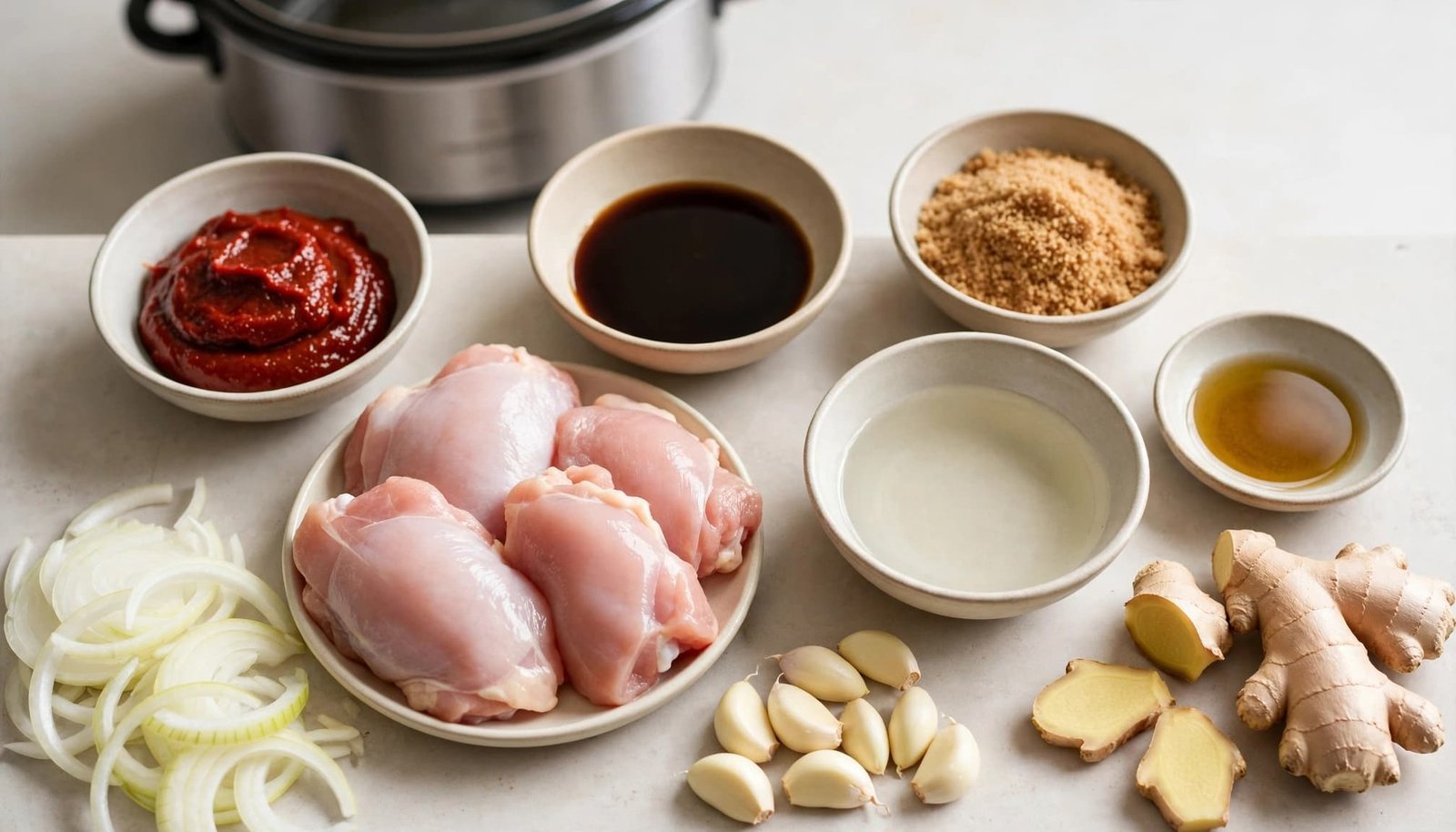
Gather the chicken, sauce ingredients, and simple toppings
Gather these ingredients before you begin:
- 2 pounds boneless, skinless chicken thighs, with large pieces of excess fat trimmed.
- 1/3 cup low-sodium soy sauce for the savory base.
- 2 tablespoons gochujang for chili heat and fermented flavor.
- 2 tablespoons brown sugar to balance the salty sauce.
- 1 tablespoon rice vinegar for mild acidity.
- 1 tablespoon toasted sesame oil for a nutty flavor.
- 1 tablespoon freshly grated ginger.
- 3 garlic cloves, minced.
- 1/2 cup thinly sliced onion.
- Optional thickener: 1 tablespoon cornstarch mixed with 1 tablespoon cold water.
- Optional toppings: sliced green onions and sesame seeds.
- Steamed rice and cooked vegetables, for serving.
Low-sodium soy sauce helps keep the finished sauce from tasting too salty. Gochujang contributes salt as well as heat, so you won’t need extra salt at the start.
Use less gochujang if you prefer mild food. Its fermented flavor adds depth, but the heat varies between products, and you can stir more into the cooked sauce later.
Read also: Slow Cooker Mashed Potatoes With Russet Potatoes
Follow these steps for tender slow cooker chicken
- Whisk the soy sauce, gochujang, brown sugar, rice vinegar, sesame oil, ginger, and garlic in a bowl. Break up any thick clumps of chili paste so the sauce coats the chicken evenly.
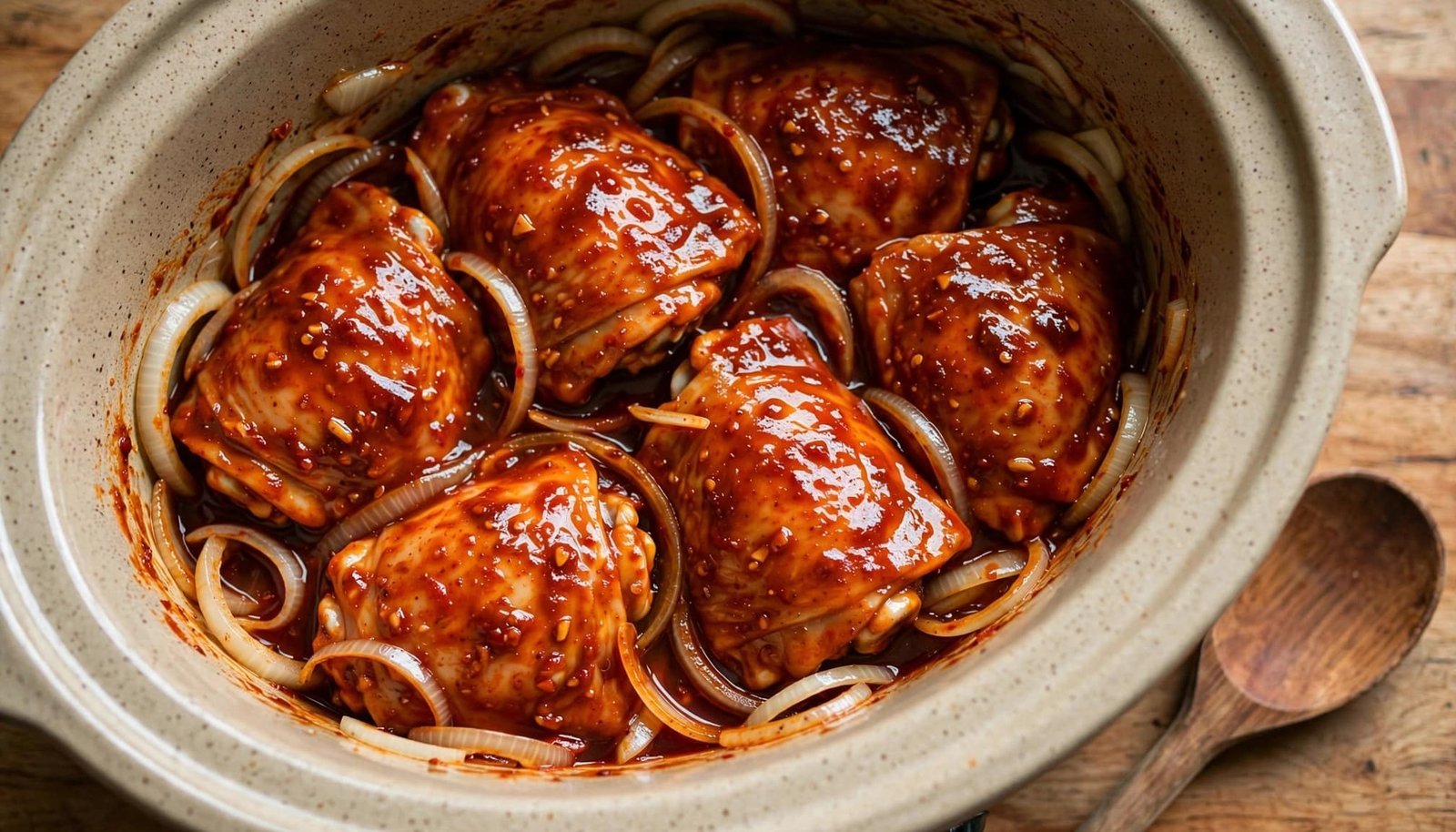
- Spread the sliced onion across the bottom of the slow cooker, then add the chicken thighs. Arrange them evenly rather than packing them into a tight mound.
- Pour the sauce over the chicken and turn the pieces to coat. You don’t need to add broth or water, since the chicken and onion release liquid as they cook.
- Cover and cook on low for about 4 to 5 hours, or high for about 2 to 3 hours. Check near the earlier end of the range, since slow cookers vary. Insert a food thermometer into the thickest part of several pieces; the chicken must reach 165°F.
- Transfer the cooked chicken to a plate. Shred it with two forks or slice it into bite-size pieces, then return it to the sauce. Keep larger pieces if you prefer a firmer texture in your bowls.
- If the sauce is thinner than you want, stir in the cornstarch and cold-water slurry. Cook on high until the sauce thickens and looks glossy. If it doesn’t reach a simmer in your cooker, thicken the sauce in a small saucepan, then combine it with the chicken.
Keep the lid closed between checks so the cooker retains heat. USDA’s slow cooker safety guidance recommends using a thermometer rather than relying on cooking time alone.
The sauce should lightly coat the chicken while leaving enough to spoon over rice. Stop thickening before it becomes stiff, since it will tighten a little as it cools.
Read also: Quick Asian Rotisserie Chicken Stir Fry for an Easy Dinner
Make the sauce taste just right for your table
Taste the sauce only after the chicken is fully cooked. The chicken releases juices during cooking, so the finished sauce won’t taste exactly like the mixture you whisked at the beginning.
For mild heat, begin with about half the gochujang. For a spicier finish, stir in a small additional spoonful near the end. Mix thoroughly, let it heat through, then taste again before adding more.
Sambal oelek or Sriracha can supply heat in a pinch, but neither gives the same fermented flavor or consistency. Treat either as a separate seasoning rather than an equal replacement.
Add a small splash of rice vinegar if the sauce tastes too sweet or heavy. Stir in a little brown sugar if you want a sweeter finish, allowing it to dissolve before tasting.
Make one adjustment at a time. Taste a bite of chicken with rice before adding more seasoning, since plain rice softens the sauce’s saltiness and heat. If the sauce tastes too concentrated, a small splash of water can loosen it without adding more salt.
Serve Korean chicken in easy weeknight bowls
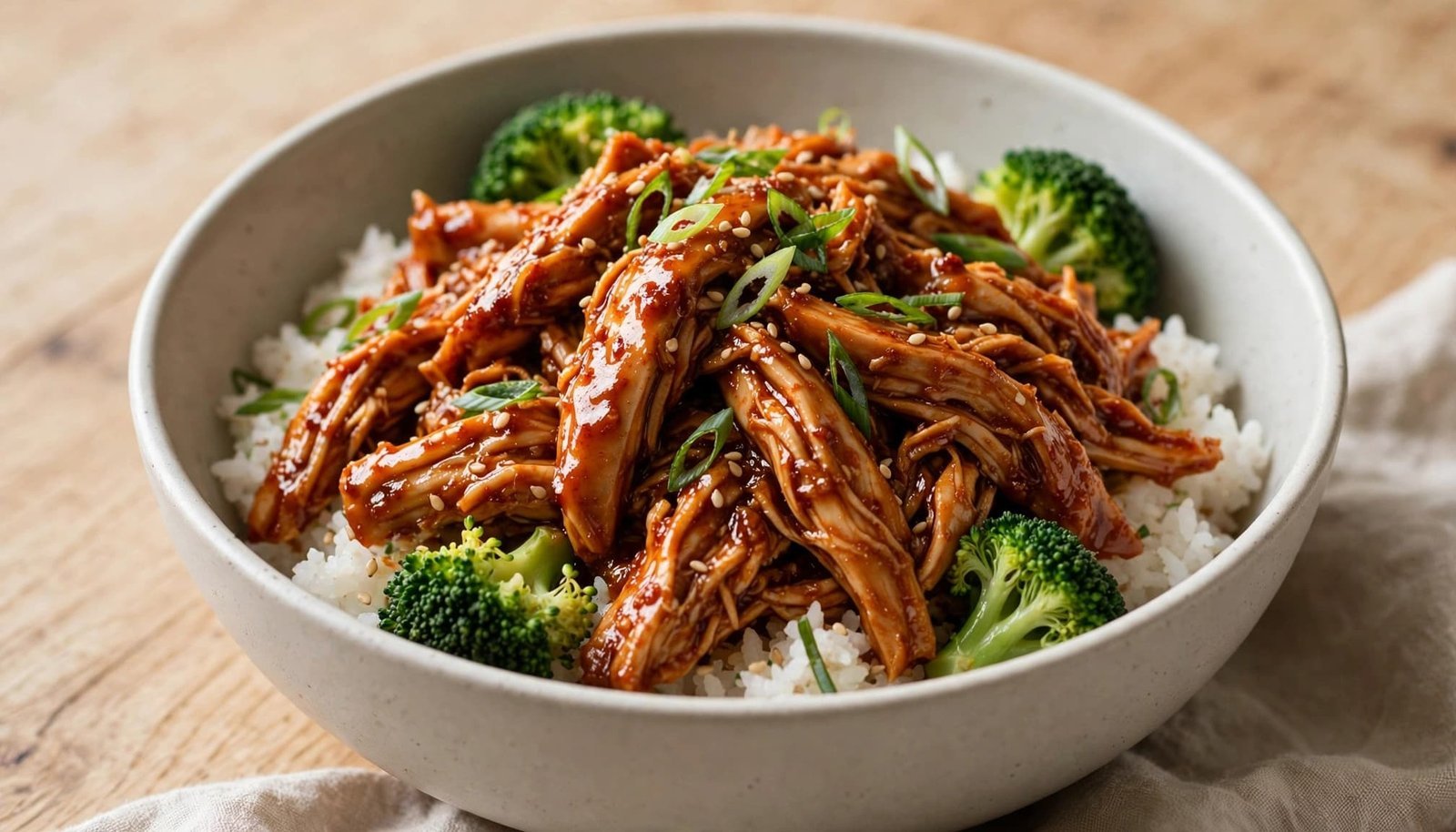
Spoon the chicken over steamed white or brown rice, then add a vegetable you can cook while the chicken finishes. Broccoli, spinach, and bok choy all work without lengthy preparation.
Steam broccoli until tender but still bright green. Sauté spinach briefly, or cook sliced bok choy until the stems soften and the leaves wilt. Keep the vegetables lightly seasoned because the chicken sauce supplies plenty of flavor.
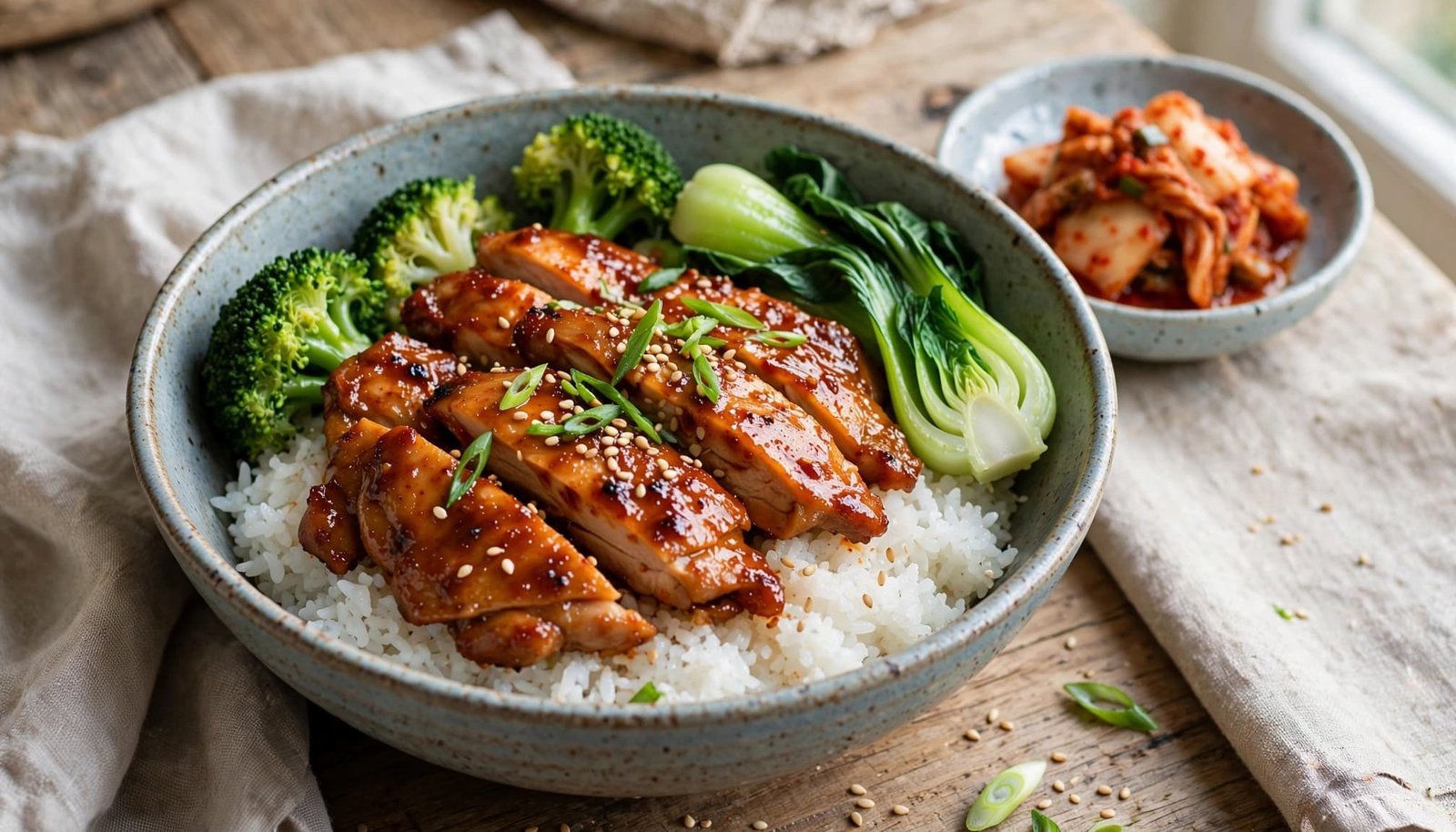
Build a bowl with rice on the bottom, chicken and sauce across the center, and vegetables alongside. Add sliced green onions and sesame seeds near the end so they keep their texture.
Kimchi adds crunch and acidity, though it’s optional if you’re keeping the meal mild. Serve it on the side so everyone can choose their own amount.
The sauce also works over cooked noodles. For lettuce wraps, drain off excess sauce before filling sturdy leaves, then offer extra sauce separately.
For more combinations you can pack ahead, our make-ahead chicken rice bowls offer other grain, vegetable, and topping ideas.
Store leftovers safely and warm them without drying them out
Divide leftover slow cooker Korean chicken into shallow covered containers and refrigerate within 2 hours. Don’t leave the full cooker on the counter until everything reaches room temperature, since a large batch cools slowly.
Keep refrigerated leftovers for 3 to 4 days. Freeze portions with some sauce for up to 3 months for best quality, using containers with enough room for expansion. Label each portion with the cooking date.
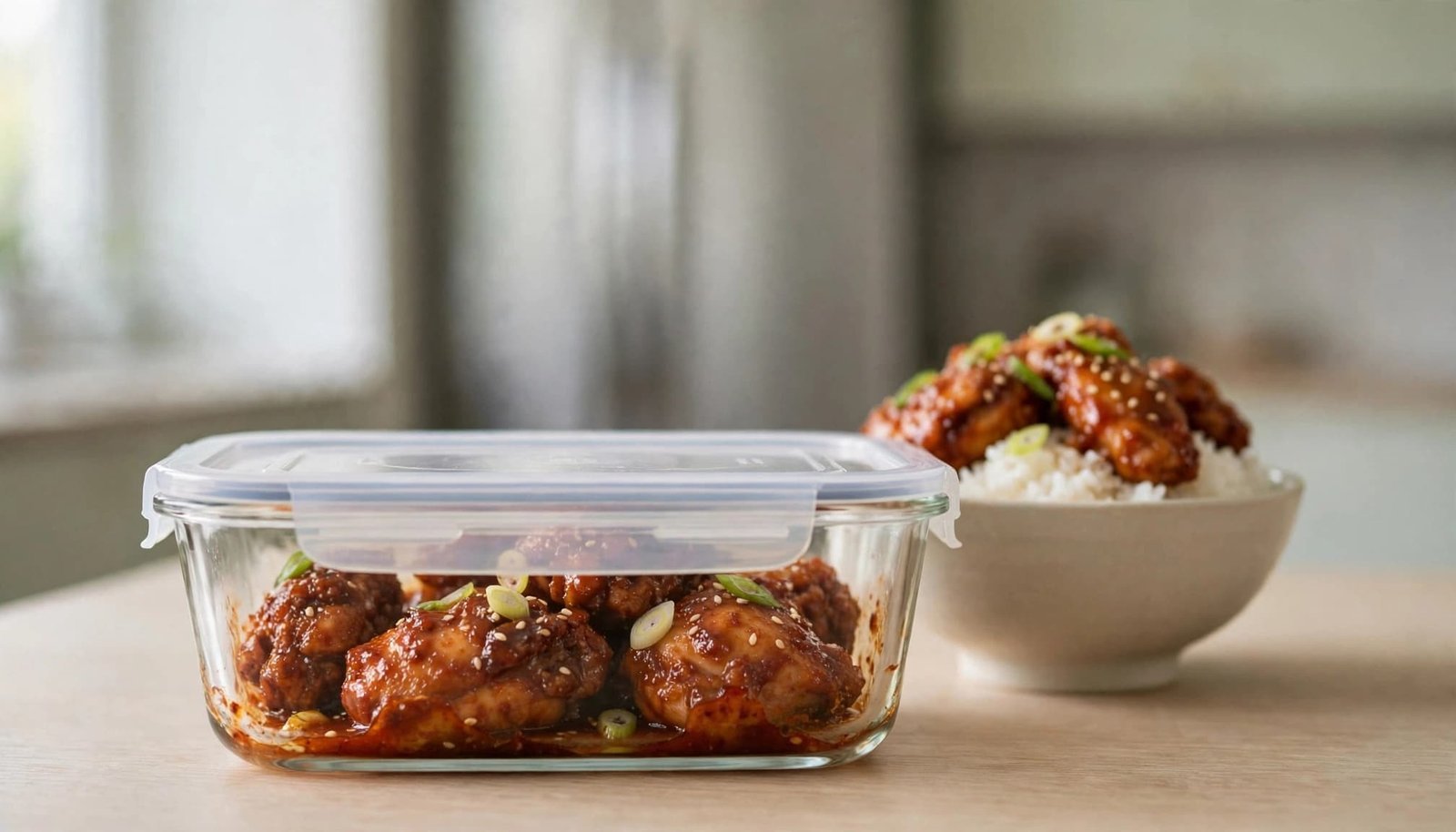
Thaw frozen portions in the refrigerator. Warm the chicken and sauce in a covered saucepan over gentle heat, adding a splash of water if the sauce has become thick.
For microwave reheating, cover loosely and stir between heating intervals so the center warms evenly. Heat the chicken to 165°F, following USDA’s leftover storage and reheating guidance.
Don’t use a slow cooker to reheat leftovers, since it warms cold food too slowly. Reheat only the portion you plan to eat, then add green onions, sesame seeds, and other fresh toppings after heating.
Frequently Asked Questions
Can I use chicken breasts instead of thighs?
Yes, boneless, skinless chicken breasts work, but they dry out more easily than thighs. Begin checking them earlier than the listed cooking window and remove each piece once its thickest part reaches 165°F. Slice or shred them, then coat them with sauce before serving.
Can I put frozen chicken in the slow cooker?
Thaw the chicken in the refrigerator before slow cooking. Frozen pieces can heat too slowly and cook unevenly, especially when they’re stuck together. Keep the thawed chicken refrigerated until you’re ready to assemble the recipe.
Do I need to sear the chicken first?
Searing is optional and adds browning, but you can put the raw, thawed chicken straight into the slow cooker. If you want browned edges, sear the thighs briefly in a hot skillet before adding them. Use the thermometer to judge final doneness either way.
What can I use if I do not have gochujang?
Use a small amount of sambal oelek or Sriracha if you need a heat-focused substitute. The sauce will taste different and may have a thinner consistency. Add cautiously, then taste the fully cooked sauce before increasing the amount.
Can I make this recipe less spicy?
Start with less gochujang than the recipe calls for, then add more only after tasting the cooked sauce. A little extra brown sugar can soften the perception of heat, but it won’t remove it. Keep additional chili sauce at the table for anyone who wants more.
A simple chicken dinner with room to adjust
This slow cooker Korean chicken needs little preparation, and the thighs stay tender in the savory ginger-garlic sauce. Keep an eye on doneness near the end, then shred or slice the chicken to suit your meal.
Adjust the cooked sauce in small amounts until the sweetness, tang, and heat taste right to you. Serve it with rice and your favorite vegetables, and save a portion with sauce for another easy dinner. The hands-off cooking leaves you time to finish the sides.
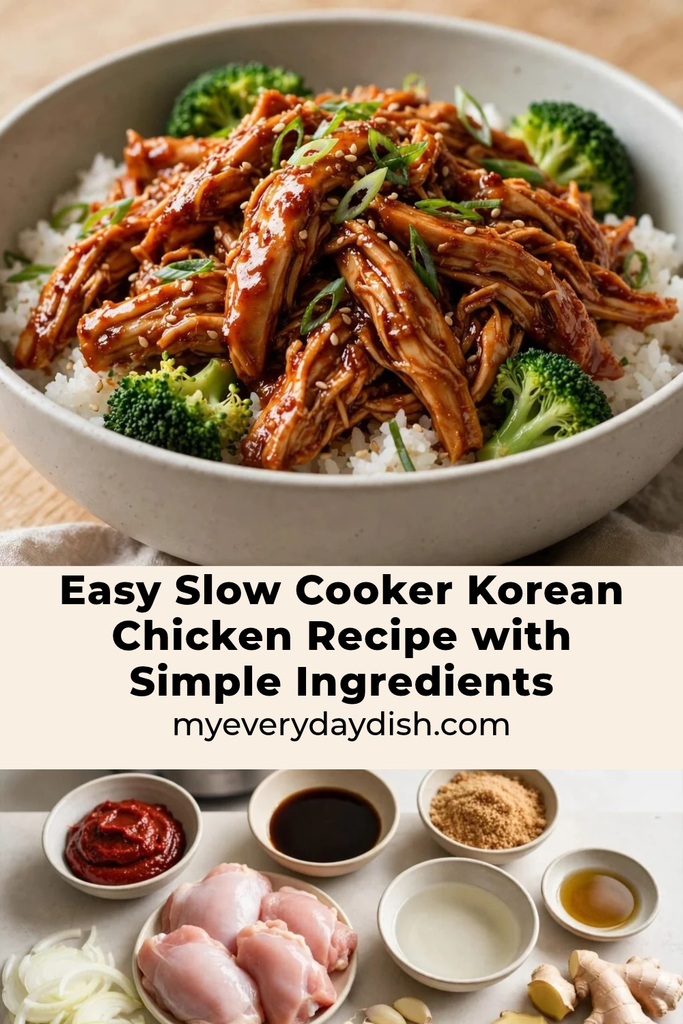
Save the pin for later

I’m the creator of My Everyday Dish, a food blog focused on easy homemade recipes, comforting family meals, simple baking, and seasonal food ideas. I love finding practical ways to make everyday cooking less stressful and more enjoyable. Here, I share recipes with simple ingredients, clear instructions, and plenty of flavor, helping you make delicious meals and treats you’ll feel confident serving at home.
Leave a Reply