
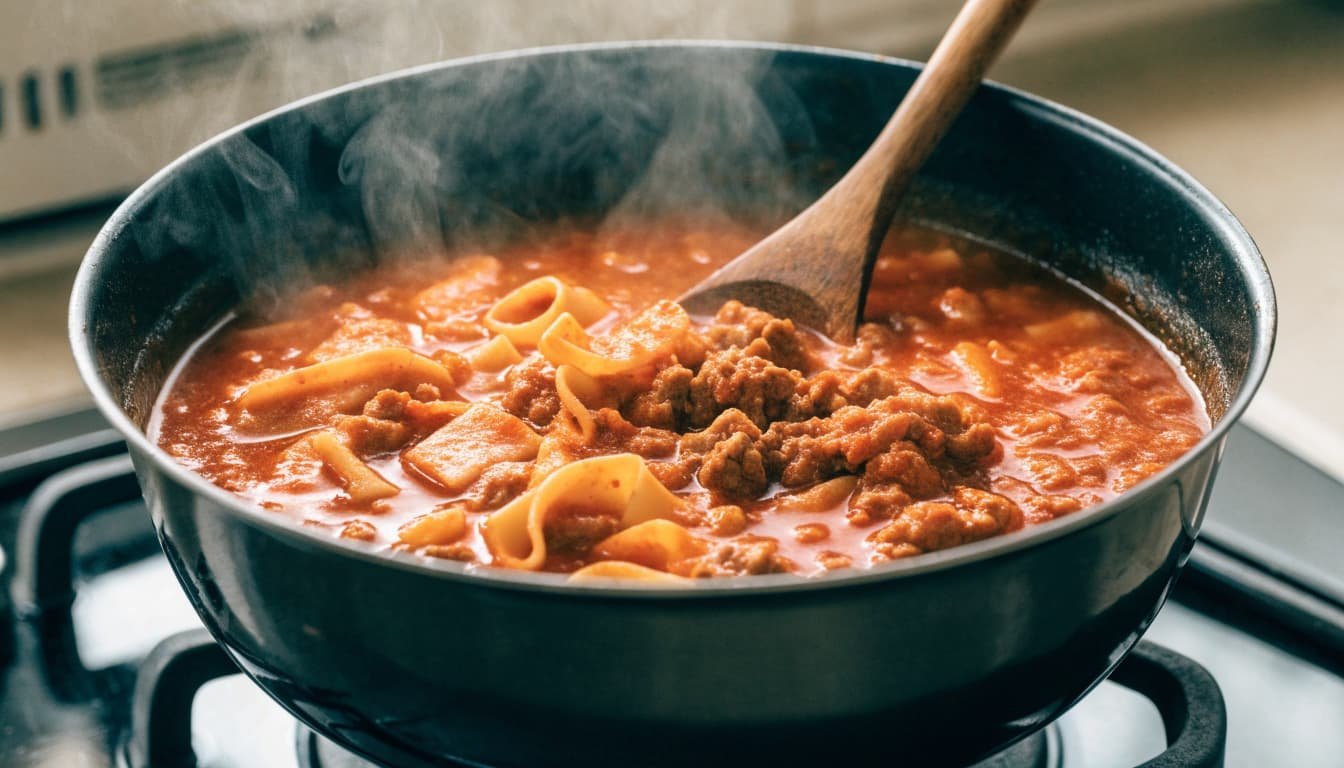
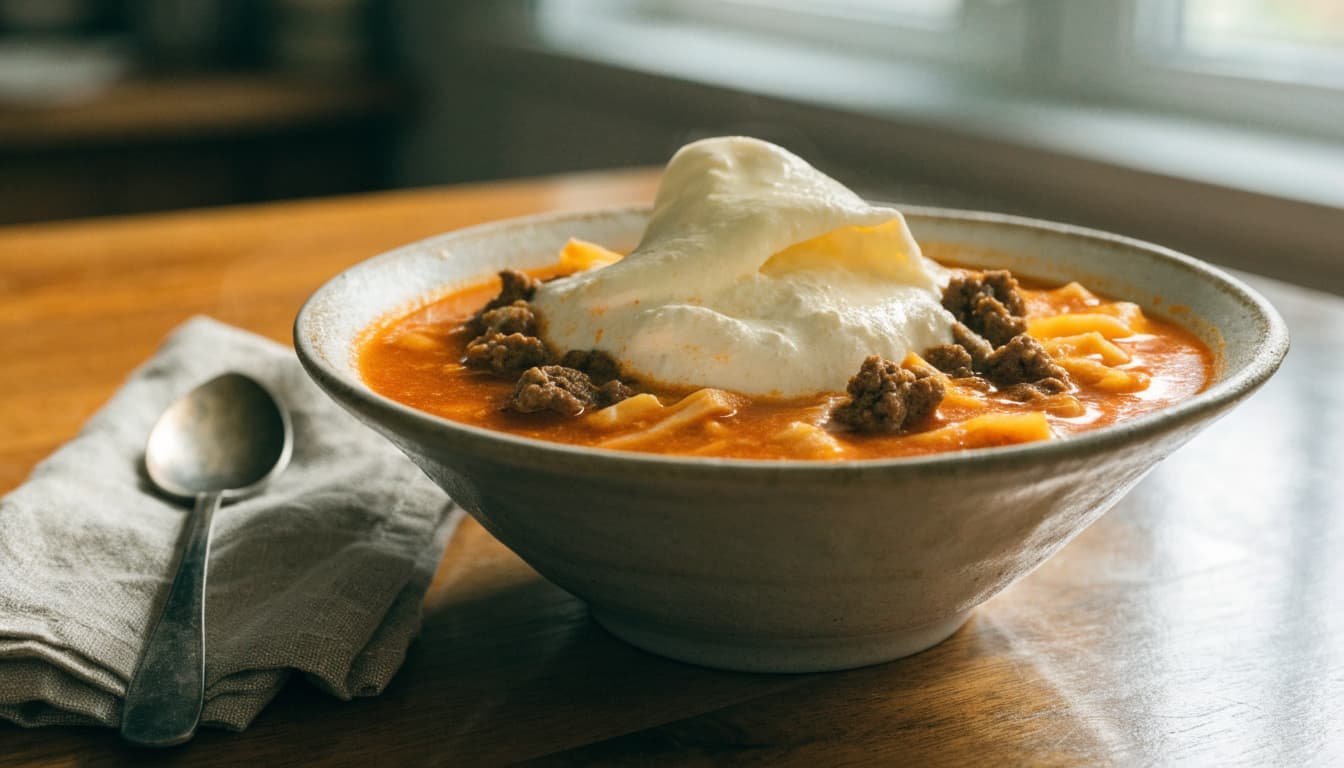
Lasagna flavor doesn’t need three pots and an hour of layering on a Tuesday night. This one pot lasagna soup with ricotta and mozzarella gets you the same tomato, pasta, and cheese comfort in about 40 minutes, with one pot to wash when dinner is done.
You brown the beef, simmer broken noodles right in the sauce and broth, then spoon cold ricotta into hot bowls so each serving turns creamy at the table. Everyday ingredients, nothing you need a special trip for.
Here’s the full method, plus the small habits that keep the noodles from going soft in leftovers.
Why This One Pot Lasagna Soup Fits a Busy Weeknight
A layered lasagna is a fine project for a Sunday. On a weekday, it means boiling noodles in one pot, browning meat in another, and building layers in a third dish. This soup skips all of that and still lands close on flavor.
Browning the beef and onion first leaves browned bits on the bottom of the pot. When you add the marinara and broth, those bits dissolve into the liquid and season it. Simmering the noodles in that same liquid means the starch thickens the broth slightly, so it tastes richer without a roux or a cream addition.
The cheese does the rest. A spoonful of ricotta and a scatter of mozzarella on top of each bowl makes a plain soup read like a baked pasta dish.
If you want another route to the same comfort, our easy beef lasagna soup uses crushed tomatoes and beef broth and simmers the noodles at the very end. Both versions are weeknight work.
Gather These Simple Ingredients for Lasagna Soup
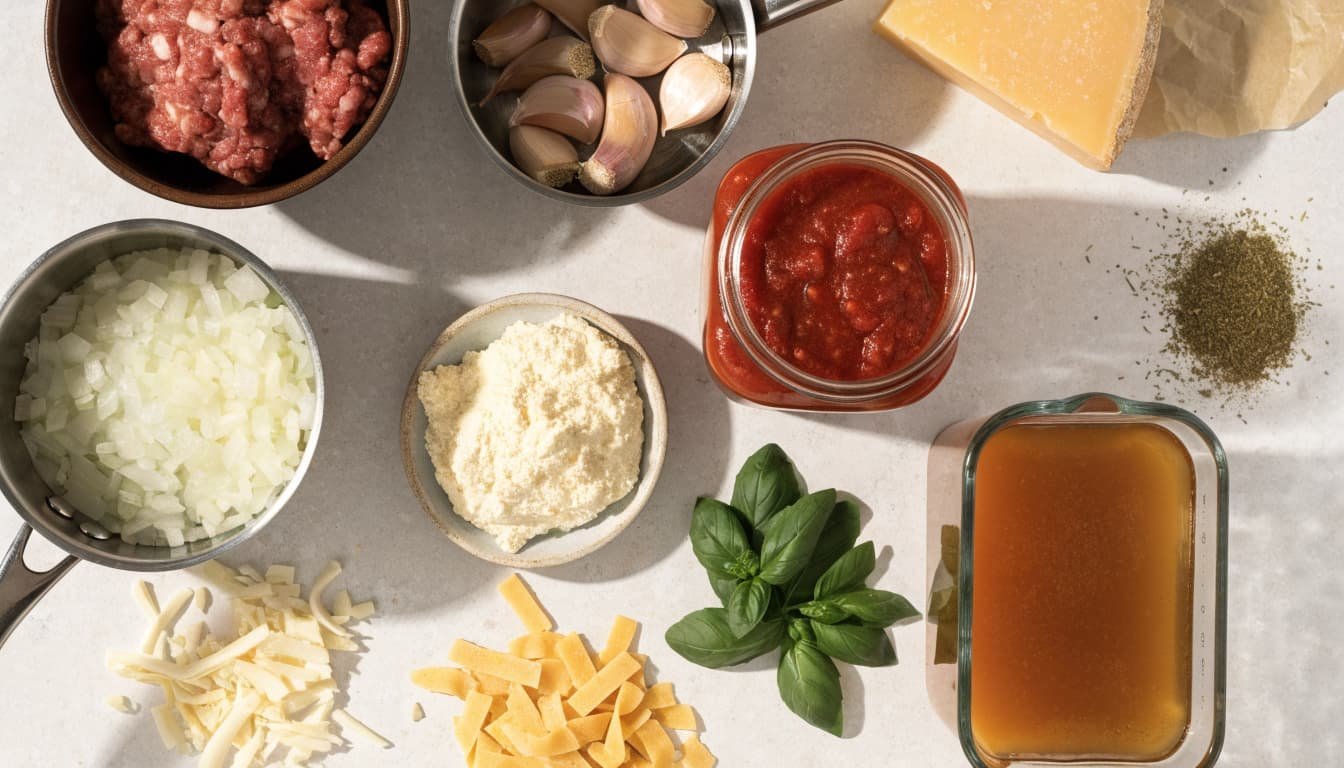
These are the amounts we use for six generous bowls. Pantry staples carry most of the list.
| Ingredient | Amount |
|---|---|
| Ground beef | 1 pound |
| Small onion, diced | 1 |
| Garlic cloves, minced | 2 |
| Marinara or tomato sauce | 1 jar (24 ounces) |
| Low-sodium chicken broth | 4 cups |
| Lasagna noodles, broken, or mini mafalda | 6 noodles or 2 cups |
| Italian seasoning | 1 teaspoon |
| Salt and black pepper | to taste |
| Ricotta | 1/2 cup |
| Shredded mozzarella | 1/2 cup |
| Parmesan and fresh basil | optional |
For a richer bowl, go up to 1 cup of ricotta with the same 1/2 cup of mozzarella. The soup itself doesn’t change, only how thick the cheese layer sits on top.
Read also: Roasted Butternut Squash Soup With Maple and Spices
Soup Base Ingredients
Ground beef gives the pot its savory base, though ground turkey or crumbled Italian sausage works with the same timing. Onion and garlic go in early so they soften before the liquid arrives.
Marinara carries the tomato flavor, and a jar you already like is the right choice here. Low-sodium broth keeps you in control of the salt, since marinara and Parmesan both bring their own. If you only have regular broth, hold the added salt until the end and taste first.
Ricotta and Mozzarella Topping
Keep both cheeses out of the pot. They go into each bowl at the end, so every serving gets a cold dollop of ricotta and a little melted mozzarella instead of a diluted, milky broth.
Parmesan and torn basil are optional, and both are worth it when you have them. Use whole-milk ricotta if you can. It stays creamier against the hot soup.
How to Make One Pot Lasagna Soup With Ricotta and Mozzarella
The whole recipe happens in one large pot or Dutch oven, start to finish. Have everything chopped and measured before you turn on the heat, because the steps move quickly once the beef hits the pan.
Step 1: Brown the Meat and Build the Flavor Base
Heat a large pot over medium-high heat. Add the ground beef and diced onion, then cook for 6 to 8 minutes, breaking the meat apart as it browns. The onion should be soft and the beef should have no pink left.
Drain excess fat if the pot looks greasy, leaving a thin coating behind. Add the minced garlic and cook for 30 seconds, just until it smells fragrant. Garlic burns fast at this heat, so keep it moving.
Stir in the marinara and Italian seasoning. Let the sauce bubble for 1 to 2 minutes. This short cook wakes up the dried herbs and coats the meat before the broth goes in.
Step 2: Add Broth and Broken Lasagna Noodles
Pour in the chicken broth and scrape the bottom of the pot with your spoon to lift anything stuck there. Bring the liquid to a gentle boil.
Break the lasagna noodles into pieces about 1 to 2 inches long. Hold them over the pot and snap them, or break them on a board first if you’d rather keep the counter clean. Add them to the pot and stir well so no pieces sit stacked together.
Lower the heat to a simmer before you walk away. A hard boil makes the noodles tumble and stick.
Step 3: Simmer Until the Noodles Are Tender
Cook uncovered at a gentle simmer for 20 to 25 minutes, until the noodles are tender. Stir every 2 to 3 minutes, reaching the bottom of the pot each time. That stirring is what keeps the noodles separate and stops them from gluing to the base.
If the soup thickens more than you’d like, add a splash of broth or water and stir. The noodles keep drinking liquid as they cook, so a looser pot at this stage is normal.
Taste before serving and add salt and pepper as needed. The amount you need depends on your marinara and broth.
Step 4: Top Each Bowl With Creamy Ricotta and Mozzarella
Ladle the hot soup into bowls. Add a spoonful of ricotta to each one, then sprinkle mozzarella over the top. The heat from the soup softens both cheeses within a minute or two.
Add Parmesan and fresh basil if you have them. Stir the cheese through just before eating, and the broth turns creamy and pale pink. If you’d rather keep the cheese in pockets, leave it alone and let each spoonful pick up some on its own.
Tips to Keep the Noodles From Turning Mushy
Stirring is the first habit worth building. Noodles want to settle on the bottom of the pot, and once they stick there, they break apart and cloud the broth.
Check tenderness rather than trusting the clock alone. Noodle brands vary in thickness, and a pot that simmered a little hotter will finish faster. Pull one piece out, bite it, and stop cooking when it’s tender with a bit of bite left. It keeps softening in the hot liquid after the heat goes off.
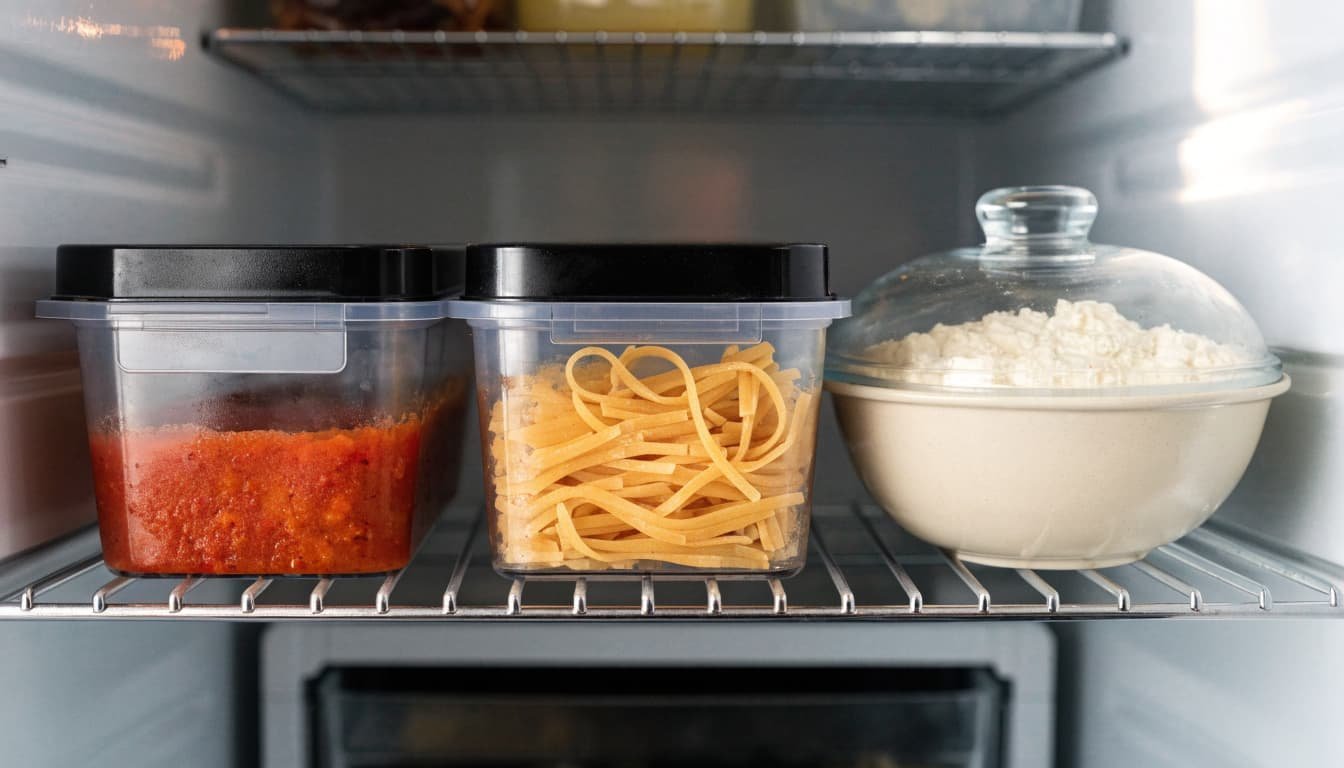
If you’re cooking for later in the week, cook the pasta separately and store it apart from the soup base. Combine them only when you reheat. This is the single biggest difference between soup that tastes fresh on Thursday and soup that tastes like soft pasta in tomato water.
Reheating is easy to fix, too. Add a splash of broth or water as the soup warms, since the noodles will have absorbed liquid in the fridge.
A soup that looks thin at the end of the simmer will thicken as it sits. If it already looks thick in the pot, expect a stew-like bowl tomorrow.
Make-Ahead and Storage Tips for Busy Weeknights
Cool the leftovers within two hours of cooking. Spoon the soup into shallow containers rather than leaving a deep pot on the counter, since smaller portions cool faster.
Refrigerate at 40 degrees Fahrenheit or below. We keep this soup for up to 3 days, which is the window where the flavor and texture hold best. USDA FSIS guidance allows 3 to 4 days for properly handled meat leftovers, so a fourth day is within safe limits, though the noodles will have softened by then.
Reheat to 165 degrees Fahrenheit, or bring the soup to a rolling boil, stirring so it heats evenly. A splash of water or broth loosens a thick batch.
Keep the ricotta and mozzarella separate until you’re ready to eat. Cheese that sits in the soup overnight separates and turns grainy. The USDA FSIS guidance on leftovers and food safety covers the temperature details if you want the full list.
Frequently Asked Questions
Can I use mini mafalda instead of broken lasagna noodles?
Yes, and it’s the easier option. Use about 2 cups of mini mafalda and start checking for tenderness around 12 minutes, since the smaller shape cooks faster than torn lasagna sheets. Add more broth at the end if the pot tightens up.
Can I make this soup with ground turkey?
Ground turkey works with the same timing. It browns a little less deeply, so let it sit undisturbed for a minute at a time before stirring to get some color. Add an extra drizzle of olive oil if the pan looks dry. Italian sausage is another good swap, and it brings enough seasoning that you can cut the Italian seasoning in half.
Can I make a vegetarian version?
Skip the beef and start with mushrooms cooked until browned, then follow the same order. Our vegetarian lasagna soup uses white beans or lentils with spinach and vegetable broth. Use vegetable broth in place of chicken broth here for a fully meatless pot.
Can I freeze the soup?
The base freezes well for up to 3 months. Freeze it without the noodles and without the cheese, then cook fresh pasta when you reheat. Noodles frozen in the broth turn soft and break down, so this step is worth the extra few minutes.
How do I make it spicier?
Add 1/2 teaspoon of crushed red pepper flakes with the garlic, or use a spicy marinara. Hot Italian sausage in place of the ground beef adds heat without extra work. Taste before adding more, since the flakes get stronger as the soup sits.
Conclusion
Weeknight dinner doesn’t have to be a compromise between fast and satisfying. This one pot lasagna soup with ricotta and mozzarella gives you the tomato, pasta, and cheese combination you were already craving, with one pot to wash and about 40 minutes of your evening.
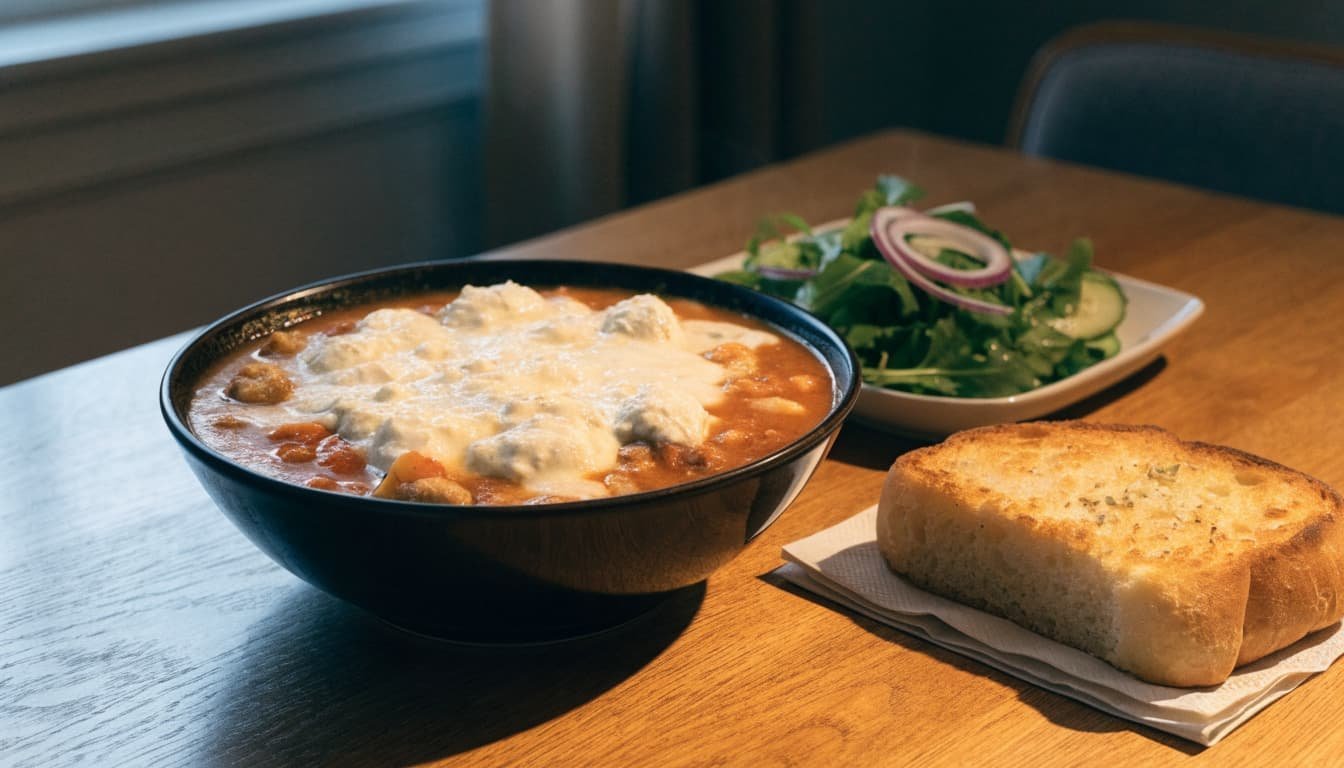
Serve it with garlic bread and a simple green salad, and dinner covers itself. Then make it yours: crumbled sausage, a handful of spinach at the end, extra vegetables, or a spicier sauce all fit the same method.
The ricotta on top is what makes it feel like more than soup, so don’t skip it.
Save the pin for later


I’m the creator of My Everyday Dish, a food blog focused on easy homemade recipes, comforting family meals, simple baking, and seasonal food ideas. I love finding practical ways to make everyday cooking less stressful and more enjoyable. Here, I share recipes with simple ingredients, clear instructions, and plenty of flavor, helping you make delicious meals and treats you’ll feel confident serving at home.
Leave a Reply