Creamy mashed potatoes don’t need milk. With tender potatoes, a little butter or olive oil, and reserved cooking water or broth, you can make a smooth, satisfying side with basic pantry staples.
These milk-free mashed potatoes fit weeknight dinners, holiday plates, and dairy-free meals. The key is simple: choose the right potato, begin with cold water, mash while hot, and add liquid slowly.
Key Takeaways
For easy homemade mashed potatoes without milk, use russets for a light texture or Yukon Golds for a richer finish. Reserve the cooking water before draining, then add it gradually after the potatoes are mashed.
Keep the potatoes hot while you work, and use a masher, ricer, or food mill instead of a blender. Gentle mixing keeps the mash soft rather than sticky.
Easy Homemade Mashed Potatoes Without Milk: Ingredients and Best Potato Choices
For 4 to 6 servings, gather:
- 2 pounds russet potatoes, Yukon Gold potatoes, or a mix
- 4 tablespoons butter, vegan butter, or olive oil
- 1/2 to 1 cup reserved potato water, chicken broth, or vegetable broth
- Salt and black pepper
Russets are high in starch and break down easily, which gives them the fluffy texture featured in this Serious Eats mashed potato method. Yukon Golds have a naturally creamy, buttery quality. A half-and-half mix gives you a lighter mash with more richness.
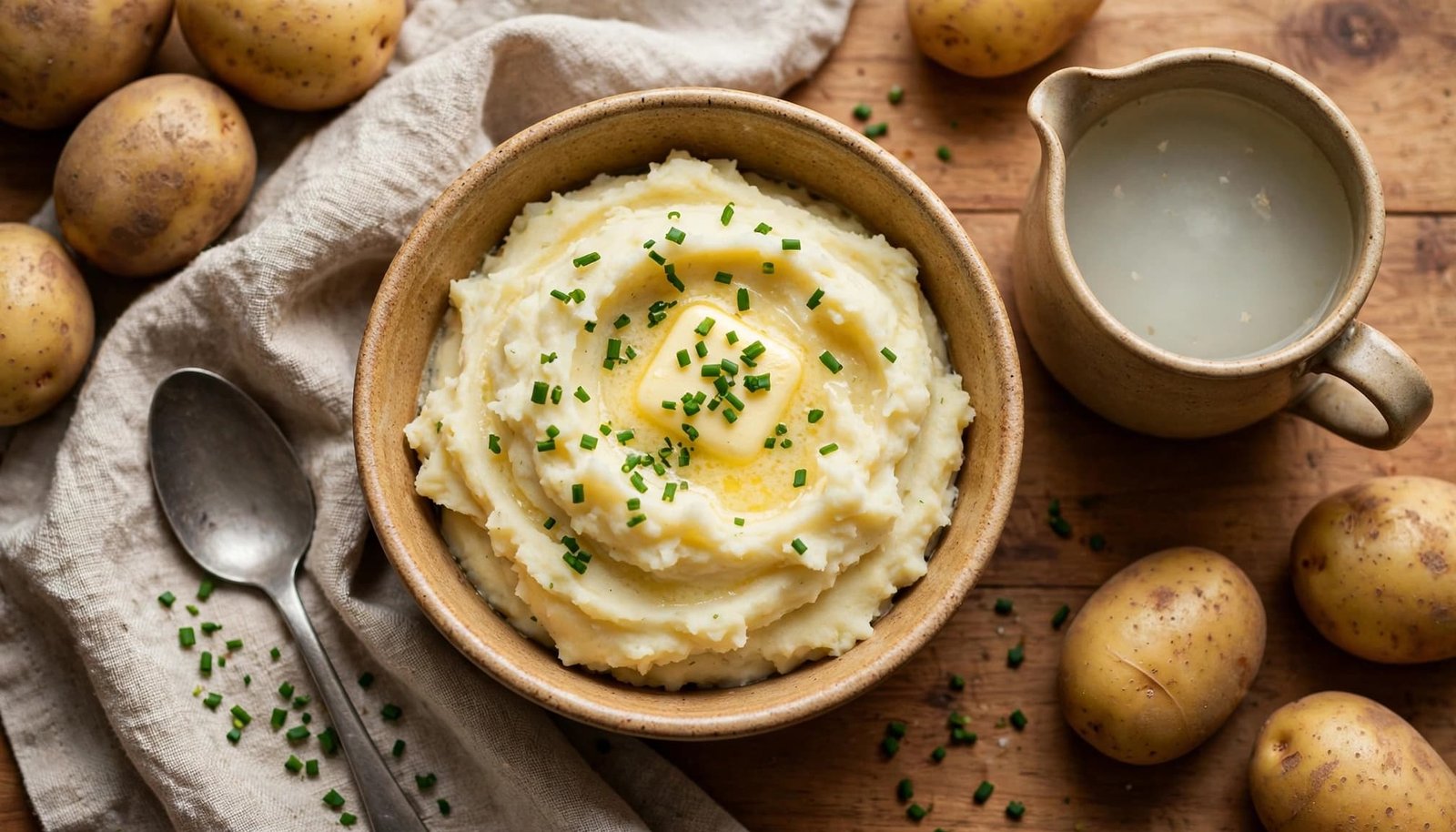
Reserved cooking water is the easiest milk substitute because it loosens the potatoes without adding another ingredient. Chicken broth gives the mash a savory edge, while vegetable broth keeps it vegetarian or vegan.
Roasted garlic, garlic powder, chopped chives, parsley, nutritional yeast, and dairy-free butter all work well here. Butter contains no milk added during this recipe, but it is still a dairy product. Choose olive oil or a labeled vegan butter if you need a fully vegan dish.
Read also: 17 Homemade Stovetop Canned Green Bean Recipes
How to Make Mashed Potatoes Without Milk Step by Step
- Peel the potatoes for a smooth mash, or scrub them well and leave the skins on for more texture. Cut them into pieces about 1 1/2 inches wide so they finish cooking at the same time.
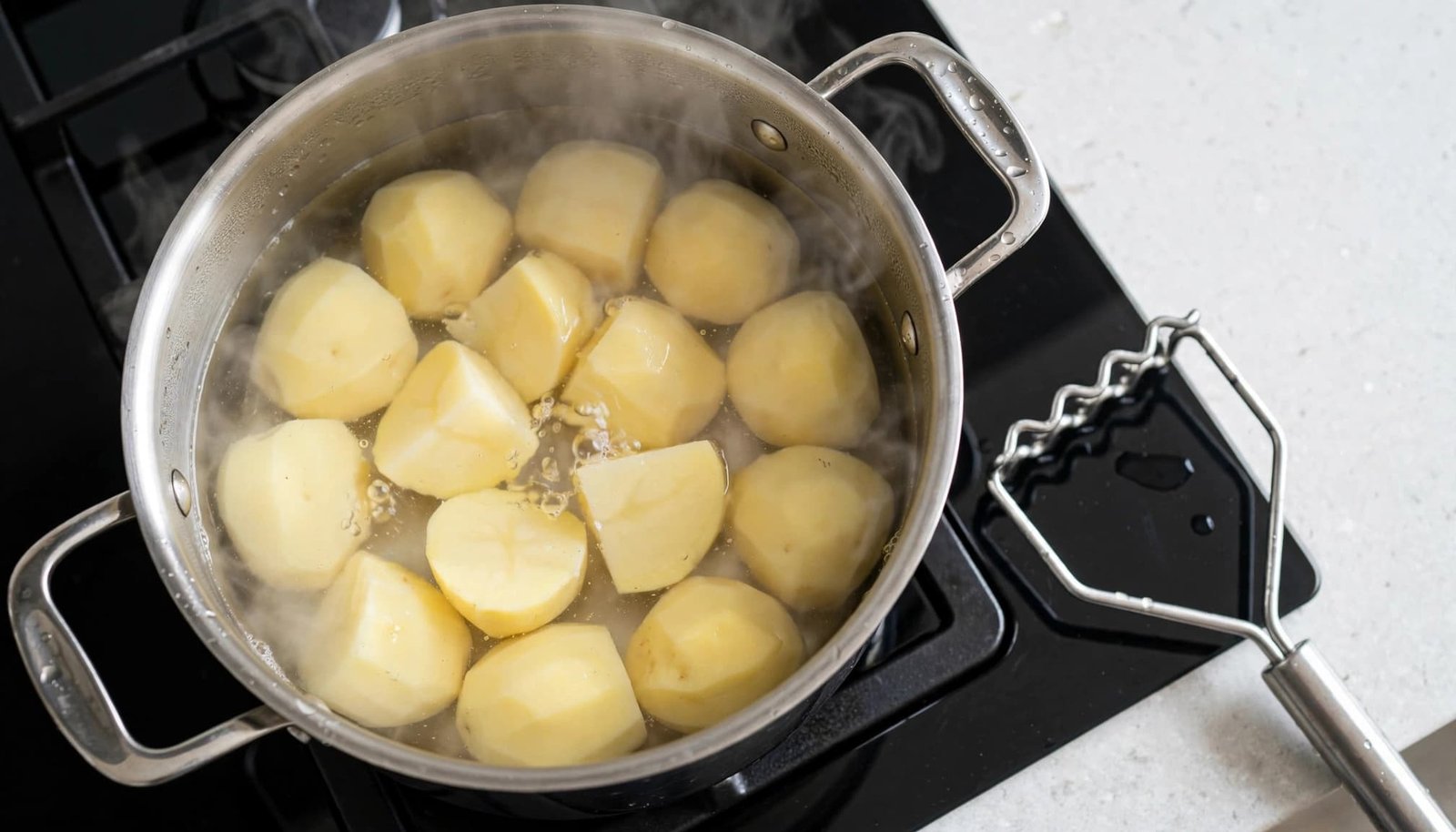
- Put the potatoes in a large pot and cover them with cold water by about 1 inch. Add a generous pinch of salt. Starting with cold water helps the centers and outsides cook evenly.
- Bring the pot to a boil, then lower the heat to a steady simmer. Cook for 15 to 20 minutes, until a fork slides into each piece without resistance.
- Before draining, scoop out about 1 cup of the cooking water. Drain the potatoes well. If they look watery, return them to the warm pot over low heat for 30 to 60 seconds, shaking the pot gently to release excess moisture.
- Mash the potatoes while they are still hot. Add butter, vegan butter, or olive oil first. Then pour in warm potato water or broth a few tablespoons at a time, mashing between additions.
- Stop when the potatoes reach your preferred consistency. Season with salt and pepper, then fold in garlic, herbs, or nutritional yeast if you like.
A handheld potato masher produces a home-style texture with small lumps. A ricer makes the fluffiest potatoes, while a food mill creates a smooth, refined mash. Avoid blenders, food processors, and electric mixers because they can make potatoes gummy.
Texture and Flavor That Make the Difference
How to Get Creamy, Fluffy Texture Without Adding Milk
Add fat before most of the liquid. Butter or olive oil coats the potato particles first, so the finished mash feels richer even without dairy milk. Warm cooking water or broth also blends in more easily than cold liquid.
Pour the liquid in slowly. Potatoes can go from thick to loose quickly, especially with Yukon Golds. Mash gently and stop as soon as the texture looks right, since aggressive mixing releases excess starch.
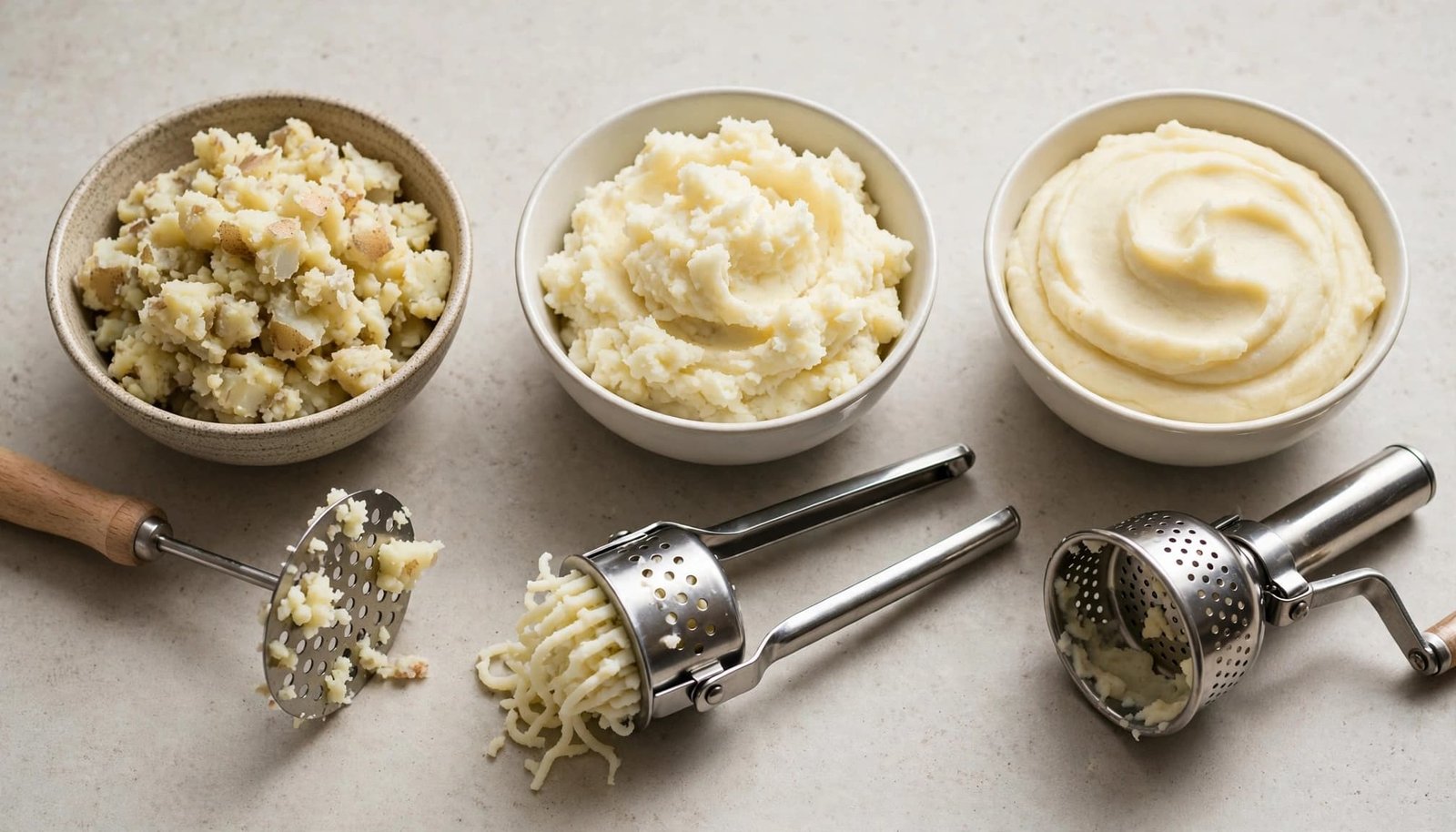
A ricer or food mill improves smoothness without the aggressive mixing that turns potatoes gluey.
Waxy potatoes, such as red or new potatoes, hold their shape well but can make a dense mash. For classic easy homemade mashed potatoes without milk, russets and Yukon Golds are more forgiving choices.
Read also: Easy Mashed Russet Potatoes With Skin Recipe
Easy Flavor Variations for Dairy-Free Mashed Potatoes
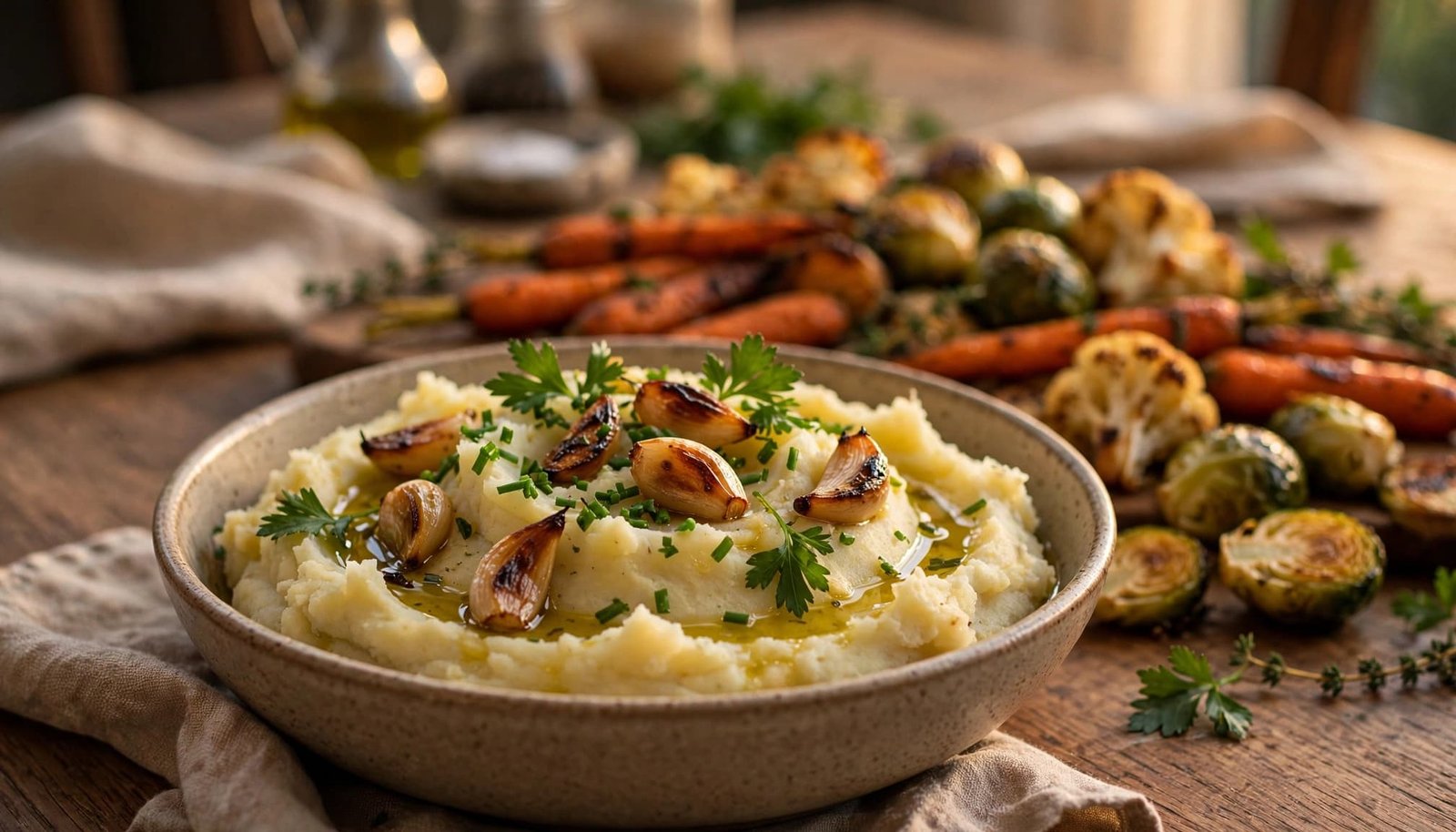
For garlic mashed potatoes, stir in roasted garlic cloves after mashing, or add 1/2 teaspoon garlic powder with the salt. Chives and parsley bring fresh flavor without changing the creamy texture.
Olive oil mashed potatoes are a simple vegan option. Use vegetable broth for added savoriness, then finish with olive oil and black pepper. Nutritional yeast adds a mild savory note, while a small spoonful of tahini gives the potatoes a richer, sesame-like depth.
Coconut milk can work in a pinch, but it may add a sweet or tropical flavor. For a classic side dish, potato water, broth, olive oil, or vegan butter is usually a better fit.
Fix Common Mashed Potato Problems Before Serving
Potatoes that feel too thick need more warm liquid. Add reserved water or broth one tablespoon at a time, then mash gently until the texture loosens.
If the mash turns too loose, warm it in an uncovered pot over low heat. Stir often and let extra moisture evaporate gradually. Don’t crank up the heat, or the bottom may scorch.
Bland mashed potatoes usually need more salt. Add a small pinch, taste, and repeat until the flavor comes forward. Broth, garlic, herbs, or black pepper can also help, but salt should come first.
Gluey potatoes can’t be fully reversed. Overmixing, a blender, a food processor, or waxy potatoes usually cause the problem. Fold in a little warm butter or olive oil and serve them as soon as possible.
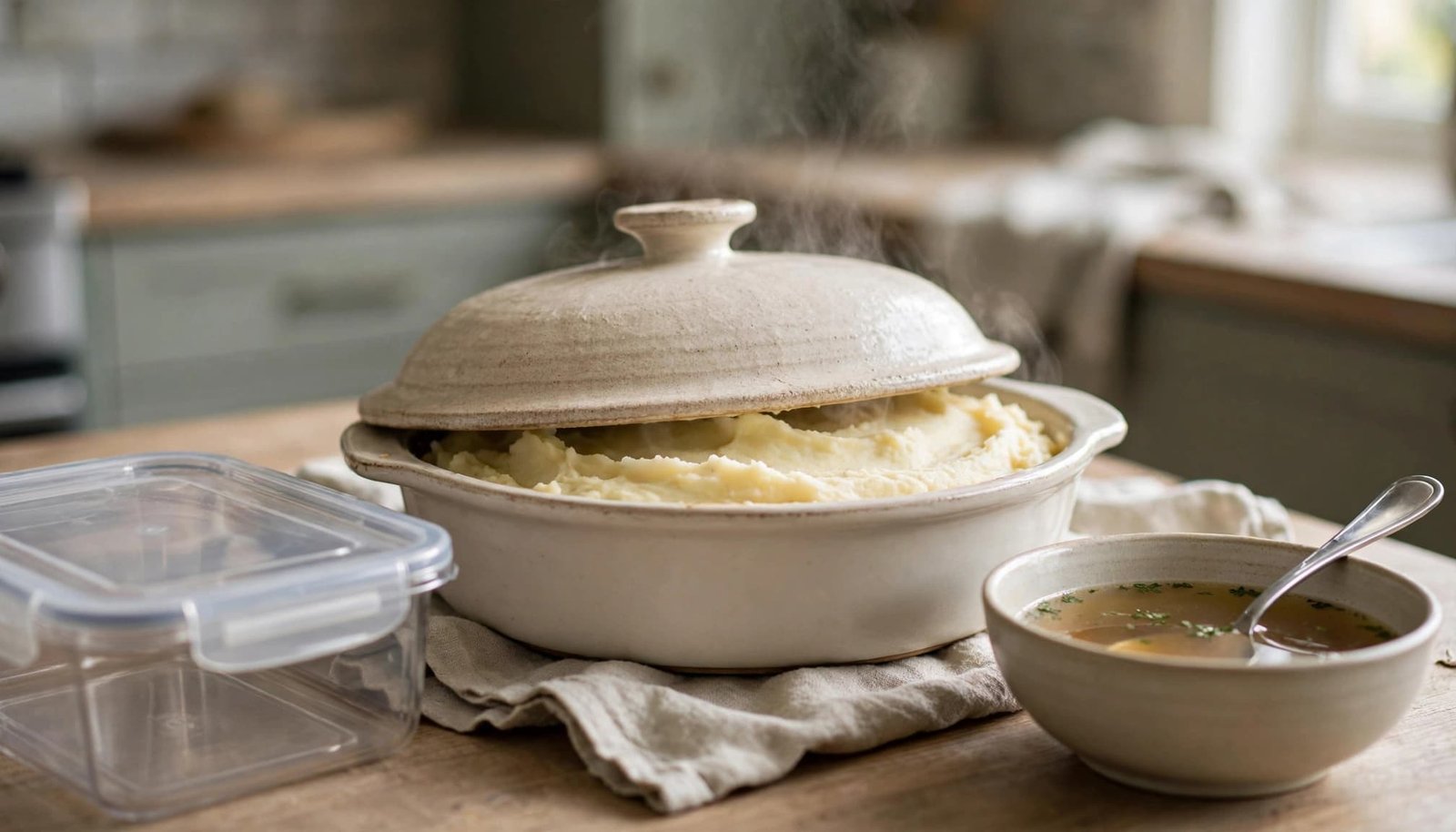
Store leftovers in a covered container in the refrigerator for 3 to 5 days. Reheat gently with a splash of broth or water, stirring often. The Kitchn also recommends adding broth and butter when reheating mashed potatoes to restore moisture.
Frequently Asked Questions
Can I use plain water instead of milk in mashed potatoes?
Yes, plain water works when you don’t have another option. However, reserved potato water is a better choice because it has cooked with the potatoes and blends in naturally. Add it slowly, then season well so the mash doesn’t taste flat.
Can I make these mashed potatoes completely vegan?
Yes. Use olive oil or vegan butter, along with reserved potato water or vegetable broth. Check labels on broth and butter alternatives, since some products contain dairy ingredients.
What are the best potatoes for mashed potatoes without milk?
Russets make fluffy, light mashed potatoes, while Yukon Golds make a creamier, richer bowl. Combining the two gives you a useful middle ground. Both varieties appear in this creamy mashed potato recipe, which reflects why the pairing works so well.
Why did my mashed potatoes turn out gluey?
Potatoes turn gluey when you work them too hard and release too much starch. Food processors, blenders, and electric mixers are common causes. Mash by hand or use a ricer, then stop as soon as the potatoes are smooth enough.
Can I prepare these mashed potatoes ahead of time?
You can make them ahead and refrigerate them in a covered container. They will firm up as they cool, so reheat them slowly with a small splash of potato water or broth. Stir often until the potatoes are creamy again.
A Dependable Milk-Free Side Dish
Milk is optional, not essential, for a good bowl of mashed potatoes. Tender starchy potatoes, enough fat, warm cooking water or broth, gentle mashing, and careful seasoning create the texture most people want.
Start with the classic version, then make it your own with garlic, herbs, olive oil, or vegan butter. Serve it with roasted vegetables, meatloaf, chicken, or a holiday meal, and it will fit right in.

I’m the creator of My Everyday Dish, a food blog focused on easy homemade recipes, comforting family meals, simple baking, and seasonal food ideas. I love finding practical ways to make everyday cooking less stressful and more enjoyable. Here, I share recipes with simple ingredients, clear instructions, and plenty of flavor, helping you make delicious meals and treats you’ll feel confident serving at home.
Leave a Reply