
Squash and apples make a warm, mildly sweet soup with a creamy texture, even without added cream. This roasted butternut squash soup is an easy Ina-inspired adaptation, with browned edges that add flavor before everything reaches the pot.
Ina Garten’s published Butternut Squash and Apple Soup is simmered on the stove; her roasted squash soup is a separate recipe. Our version borrows that roasted method and keeps the seasonings flexible, so you can adjust the finished bowl with stock, cider, or curry. Start with evenly cut ingredients and enough room on the sheet pans.
Easy Ina Garten Roasted Butternut Squash Soup With Apples: What to Know
Garten’s stovetop Butternut Squash and Apple Soup cooks squash and apples with onions, curry powder, and water, then adds cider or juice. Her separate roasted recipe also includes apples, but uses oven-roasted ingredients and chicken stock.
This home-cook adaptation follows the roasted approach, with optional curry and a small splash of cider. It’s not an exact reproduction of either published recipe.
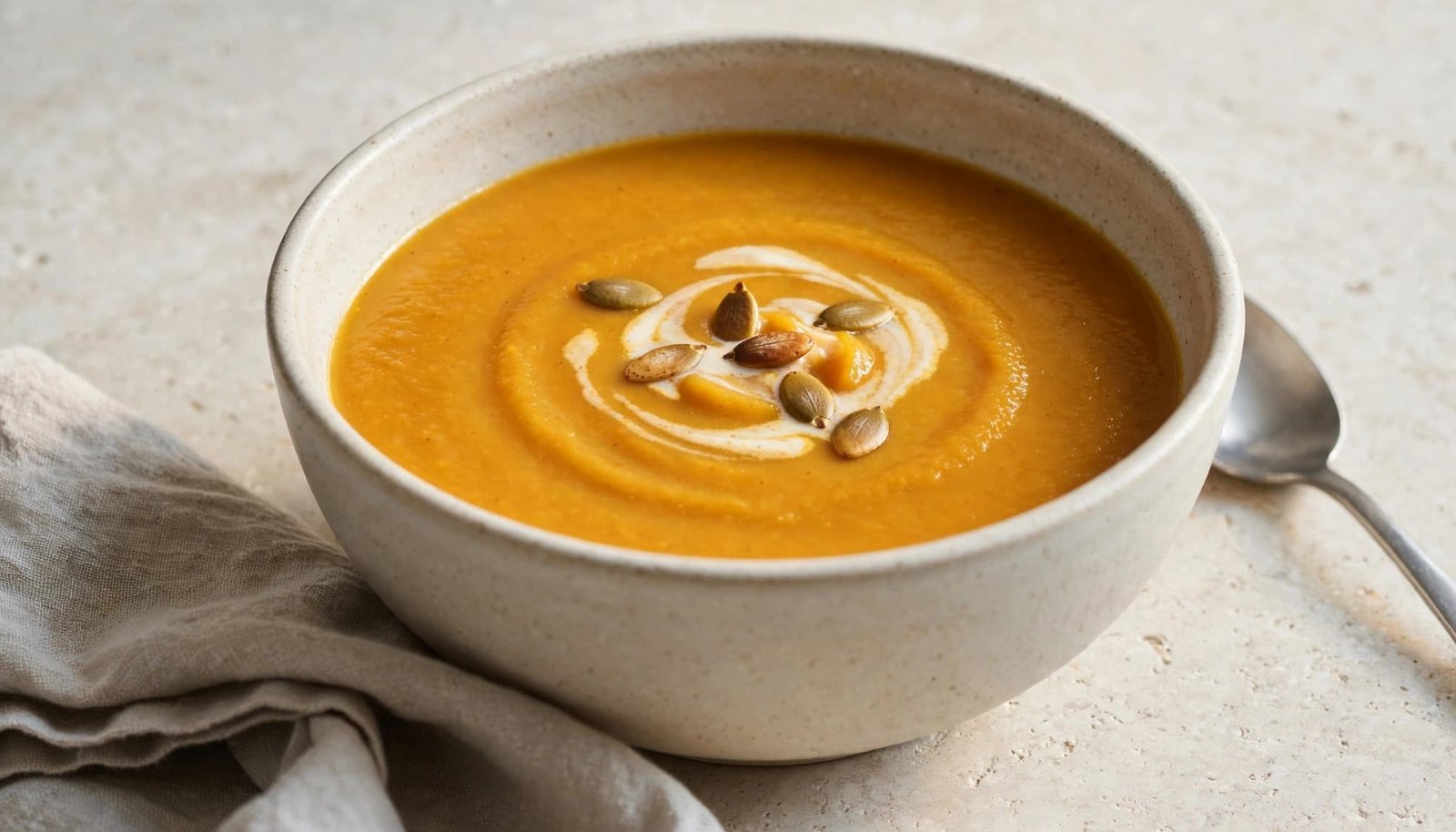
Roasting lets moisture escape while the squash, apples, and onions soften. Their exposed surfaces brown, which gives the finished soup a fuller flavor than vegetables cooked entirely in liquid.
Expect a thick, spoonable soup with gentle apple sweetness. Chicken stock gives it a savory base, while vegetable stock keeps it vegetarian. Neither version needs cream to become smooth.
Ingredients for Roasted Butternut Squash and Apple Soup
Use these amounts for the adaptation below. Start with less stock, then add more after blending so you don’t thin the soup too quickly.
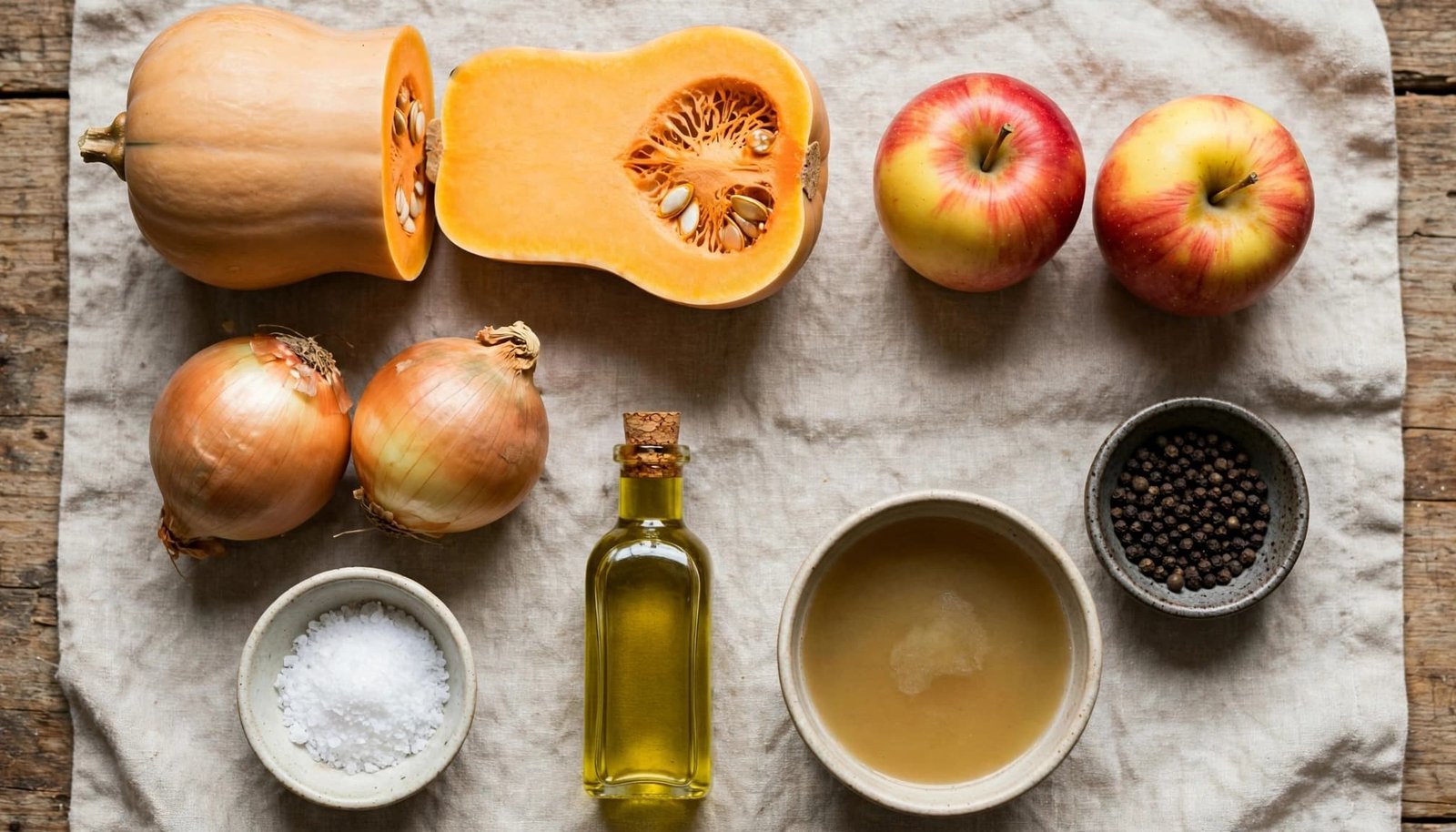
- Use 3 to 4 pounds whole butternut squash, peeled, seeded, and cubed. The squash supplies most of the body and creamy texture.
- Choose 2 sweet apples, such as McIntosh or Gala. Peel and core them so the finished soup blends smoothly.
- Add 2 medium yellow onions, peeled and cut into chunks. Roasting softens their sharpness and adds a savory base.
- Measure 3 tablespoons olive oil. This lightly coats the ingredients and helps their surfaces brown.
- Start with 1 teaspoon kosher salt and 1/2 teaspoon black pepper. Keep extra nearby for seasoning after the stock goes in.
- Have 2 to 4 cups chicken or vegetable stock ready, plus extra if needed. Low-sodium stock gives you more control over salt.
- Use up to 1/2 teaspoon mild curry powder if you want a warm spice flavor.
- Keep 2 to 4 tablespoons apple cider available as an optional finish. Choose apple cider, not apple cider vinegar.

Peeled, cubed squash saves cutting time, though larger pieces may need trimming. Vegetable stock makes the soup vegetarian, and leaving off dairy toppings keeps it dairy-free.
Skip the cider if your apples are already sweet enough. Stock will thin the soup without adding more apple flavor.
How to Make the Roasted Butternut Squash Soup Step by Step
Allow about 20 minutes for preparation, followed by roasting and a short finishing time. The 425°F oven and 35 to 45-minute roasting window follow Garten’s roasted squash soup; seasoning and cider adjustments below are flexible.
1. Prep the Squash, Apples, and Onions
Heat the oven to 425°F. Set out two large rimmed sheet pans, a sharp knife, a sturdy cutting board, and a vegetable peeler.
Cut a thin slice from each end of the squash, then peel it. Separate the narrow neck from the round base if that makes cutting easier. Halve the base, scoop out the seeds, and cut everything into roughly 1-inch pieces.
Peel and core the apples, then cut them into similar-sized chunks. Peel the onions and cut them into pieces about the same size, leaving some layers together.
Trim any oversized pieces of pre-cut squash before roasting. Similar sizes help the ingredients soften together, rather than leaving firm squash among browned apple pieces.
Read also: 21 Easy Thanksgiving Appetizers for Every Kind of Gathering
2. Roast Until the Vegetables Are Tender and Browned
Divide the squash, apples, and onions between the pans. Drizzle with olive oil, sprinkle with the starting salt and pepper, then toss until lightly coated.
Spread everything in a single layer with some space between pieces. Crowded pans hold steam, so the ingredients may soften without developing much color.
Roast for 35 to 45 minutes, turning the pieces once if needed. Swap the pans between oven racks if one is browning faster.
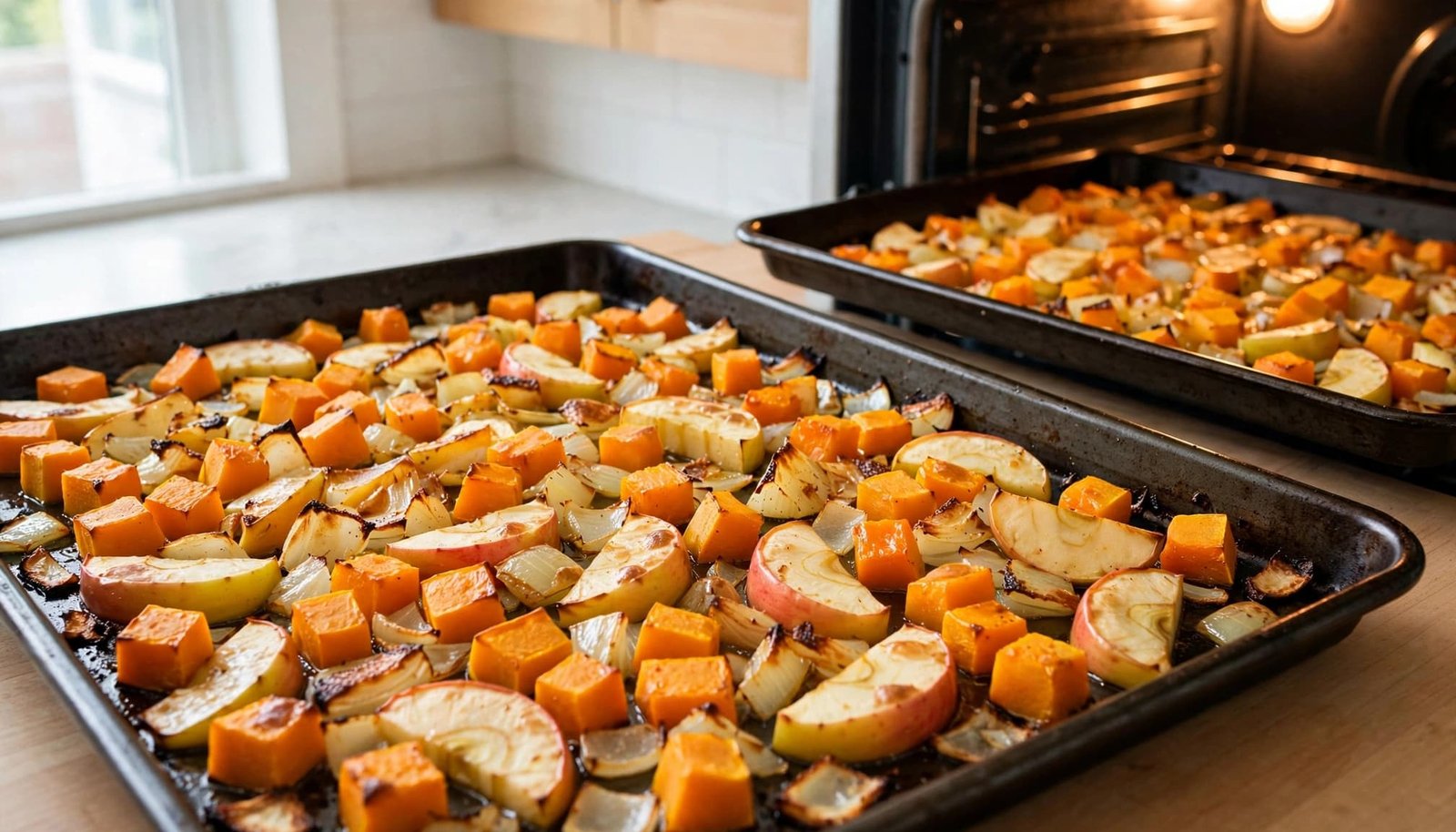
Test several squash pieces with a fork. They should give easily through the center, with lightly browned edges. Remove any small apple or onion pieces that darken before the squash finishes.
Check tenderness before blending. Firm squash can leave small, grainy pieces even when the outside looks browned.
3. Warm the Stock and Blend the Soup Smooth
Bring 2 cups stock to a simmer in a large pot. Keep the remaining stock nearby for gradual additions.
Add the roasted ingredients, including any soft browned bits you can scrape from the pans. For an immersion blender, take the pot off the heat and keep the blade head submerged while blending.
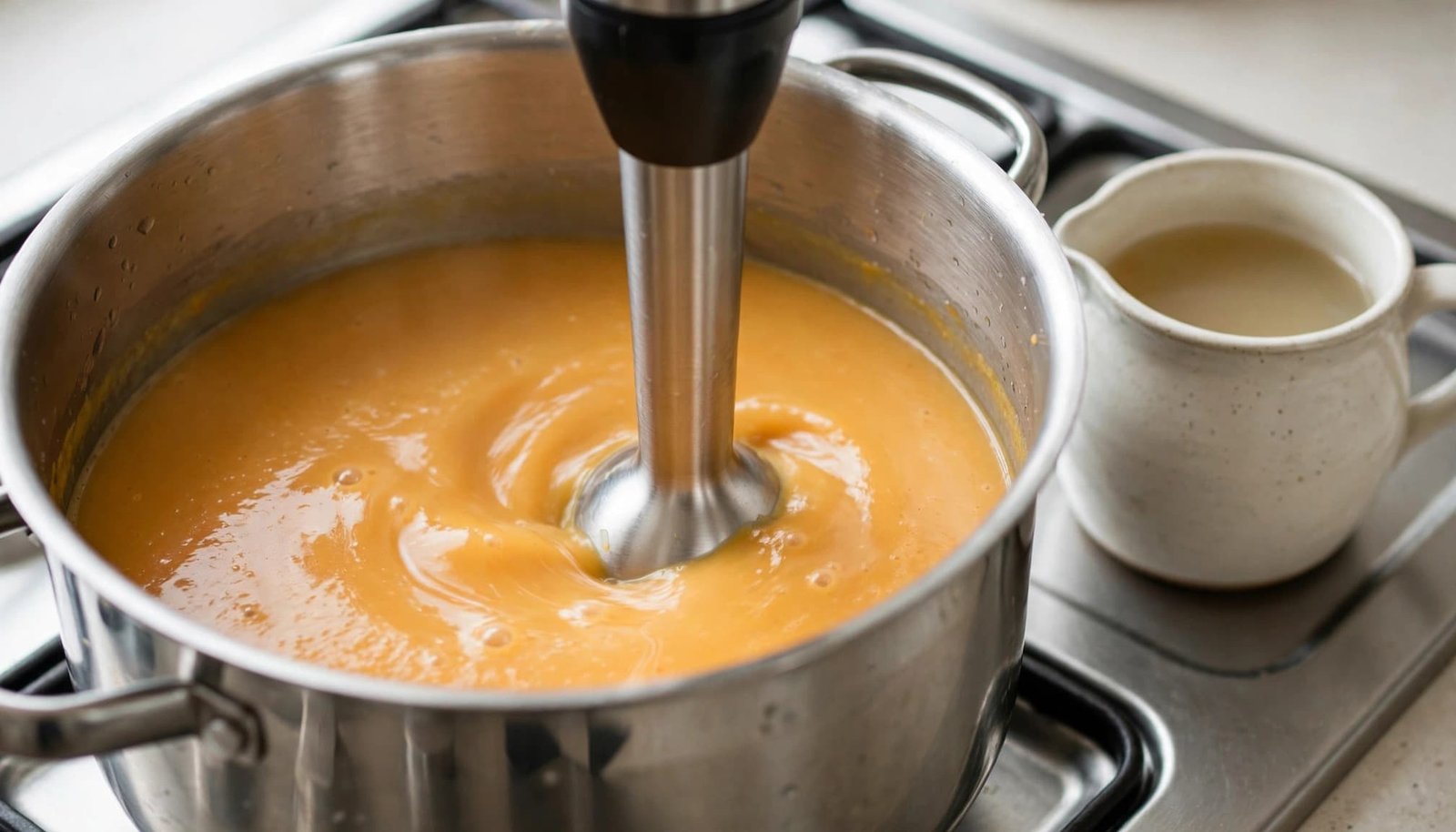
For a countertop blender, let the mixture cool slightly and work in small batches. Use a blender approved for hot liquids, fill no more than halfway, and vent according to its instructions. Never blend hot soup in a sealed personal blender.
A food processor also works, though it may leave more texture. Add stock in small amounts until the purée moves freely and reaches your preferred thickness.
Read also: Homemade Ground Beef Creamy Tortellini Soup
4. Season, Add Optional Curry, and Serve Hot
Return the purée to the pot if you used a countertop appliance. Stir in 1/4 teaspoon curry powder, then taste before adding the remaining 1/4 teaspoon.
Warm gently for several minutes so the seasoning blends into the soup. Stir along the bottom, since thick purée can catch as it heats.
Add cider a tablespoon at a time if you want more apple flavor. Use stock instead when the sweetness is already right but the soup needs thinning.
Taste near the end, then adjust salt and pepper. The finished roasted butternut squash soup should pour from a ladle without sitting in a stiff mound.
Serving Ideas, Storage, and Reheating
Top each bowl with toasted pumpkin seeds, croutons, or a small swirl of cream. Finely chopped apple adds a fresh bite; cut it shortly before serving so it doesn’t brown.
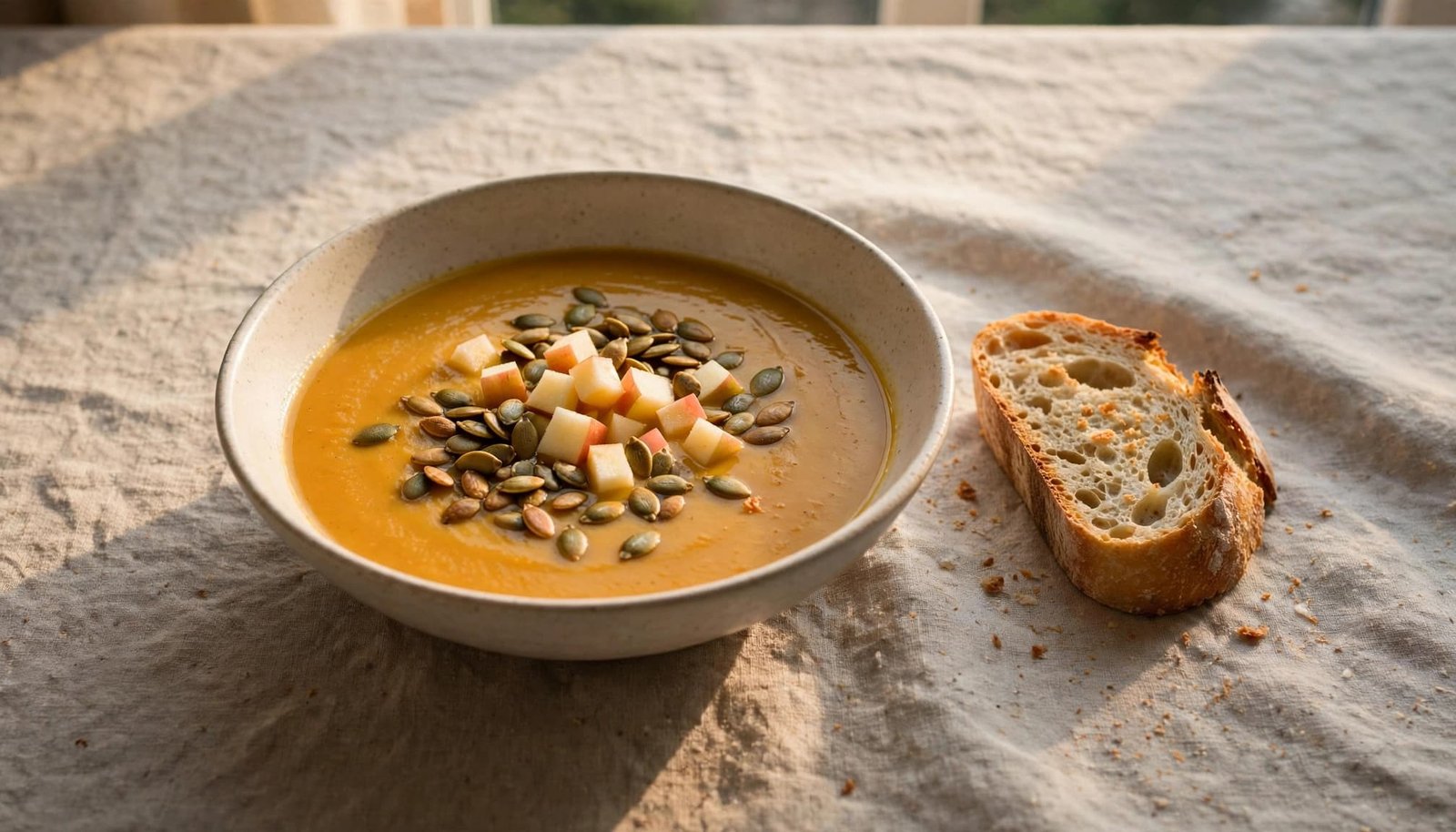
Serve with crusty bread, grilled cheese, or a green salad. Keep toppings separate if you’re preparing several portions, since seeds and croutons soften in stored soup.
For more variety during the week, our cozy fall soup recipes include other combinations of seasonal vegetables, beans, and greens.
Refrigerate leftovers within two hours, using shallow containers so the soup cools promptly. Keep covered at 40°F or below for 3 to 4 days.
Freeze individual portions for up to 3 months for best quality, leaving space for expansion. Label the containers with the date, then thaw overnight in the refrigerator.
Reheat on the stove over moderate heat, stirring often and adding stock or water if needed. Bring leftover soup briefly to a boil and make sure it reaches 165°F before serving. Add cream and crunchy toppings after reheating.
Frequently Asked Questions
Can I Use Frozen Butternut Squash?
Yes, frozen squash works, though it releases more moisture during roasting. Spread it out without thawing and allow extra time as needed, using tenderness and browning rather than the clock alone. The roasted flavor may be milder than with fresh squash.
What Can I Do If the Soup Tastes Too Sweet?
Add a little more savory stock, then taste for salt. A few drops of lemon juice can balance sweetness without changing the soup’s main flavor. Make small additions, since too much acid can overwhelm the apples.
Can I Roast the Ingredients Ahead of Time?
Yes, roast them up to two days ahead and refrigerate within two hours in a covered container. Blend with warmed stock when you’re ready to finish the soup. Include any juices collected in the container so you don’t lose flavor.
Can I Make This Without a Blender?
Use a food mill if you have one, working the softened ingredients through it before adding more stock. A potato masher gives a coarser, rustic result. Mash while the vegetables are warm and fully tender, when they break down most easily.
Can I Double the Recipe?
Yes, but roast in separate batches unless your oven has room for enough uncrowded pans. Doubling the ingredients on two pans will trap more steam and reduce browning. Combine the roasted batches in a larger pot, then add stock gradually.
A Warm Bowl With Room to Adjust
Roasting gives this squash-and-apple adaptation its fuller flavor, while careful blending supplies the creamy texture. Let the squash become completely tender, then add liquid slowly so you can keep the consistency you like.
Use stock for a more savory bowl, a little cider for extra apple flavor, and curry if you want gentle warmth. Serve the roasted butternut squash soup hot with your favorite topping, keeping anything crunchy separate until the bowls reach the table.
Save the pin for later


I’m the creator of My Everyday Dish, a food blog focused on easy homemade recipes, comforting family meals, simple baking, and seasonal food ideas. I love finding practical ways to make everyday cooking less stressful and more enjoyable. Here, I share recipes with simple ingredients, clear instructions, and plenty of flavor, helping you make delicious meals and treats you’ll feel confident serving at home.
Leave a Reply