
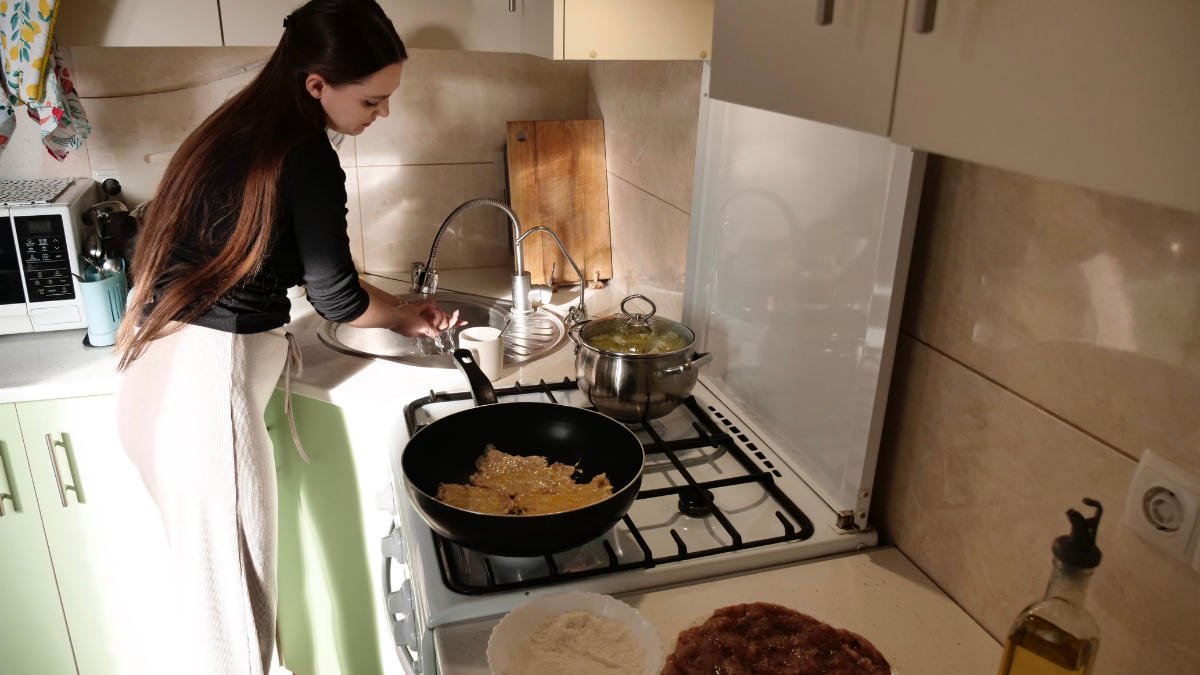
I made my first pot of this soup during a week when everyone needed something warm and easy. The kitchen smelled like onion, garlic, and Parmesan, and each soft spoonful felt far more comforting than the effort it took to make it.
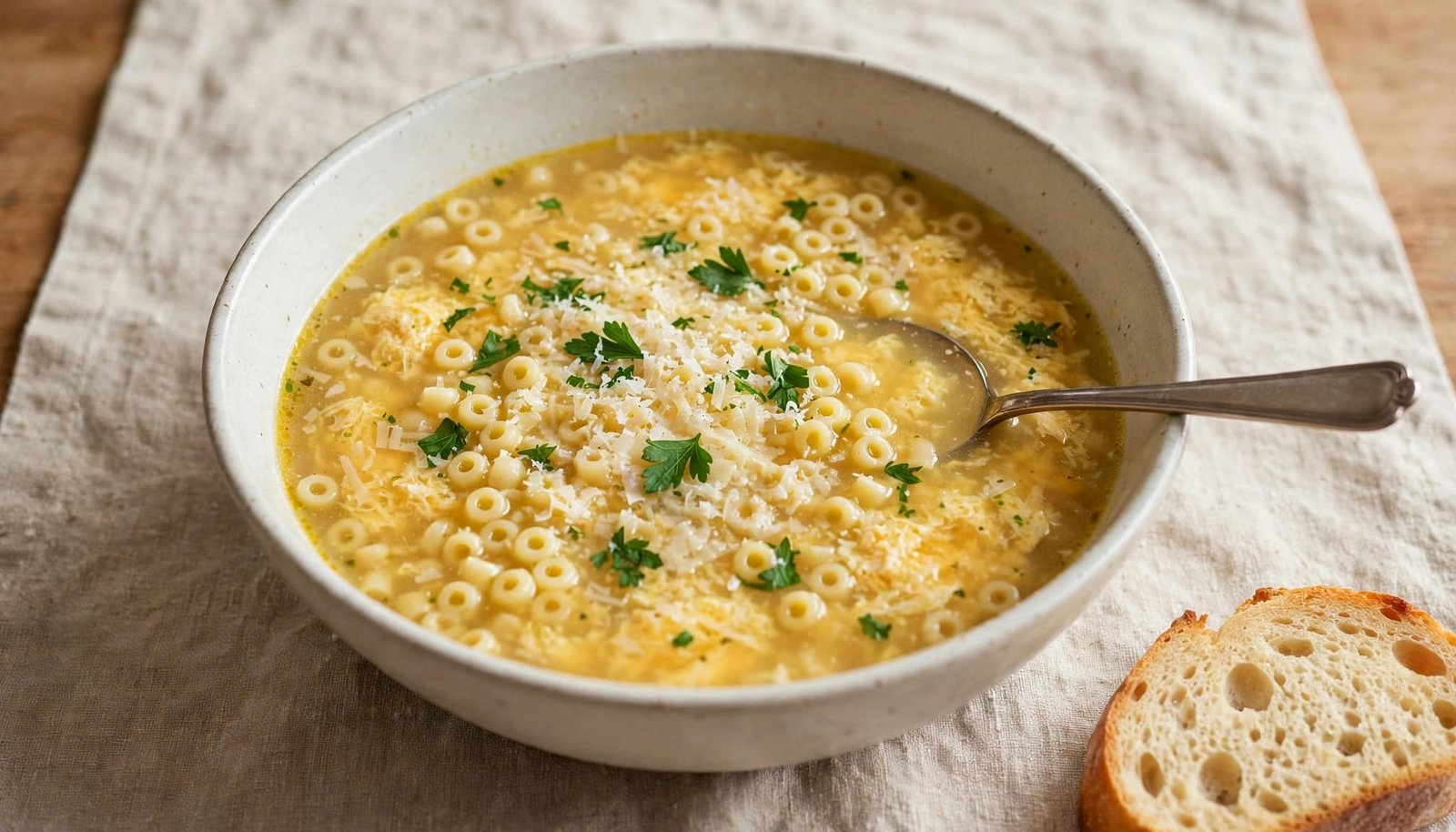
This easy Italian penicillin soup recipe is a cozy nickname for pastina soup, a simple Italian-style bowl of broth, tiny pasta, vegetables, Parmesan, and optional chicken. You can keep it rustic, blend it smooth, or finish it with soft egg ribbons. Start with a good broth, and you’ll have dinner on the table without much fuss.
Why This Easy Italian Penicillin Soup Recipe Everyone Will Love Works
This soup is comfort food, not a medical treatment. Still, it makes sense why people reach for it when they want a gentle, warm meal.
Tiny pasta makes every spoonful soft and satisfying. Meanwhile, onion, carrot, celery, and garlic bring natural sweetness to the broth. Parmesan adds savory depth, while blended vegetables create a velvety texture without cream.
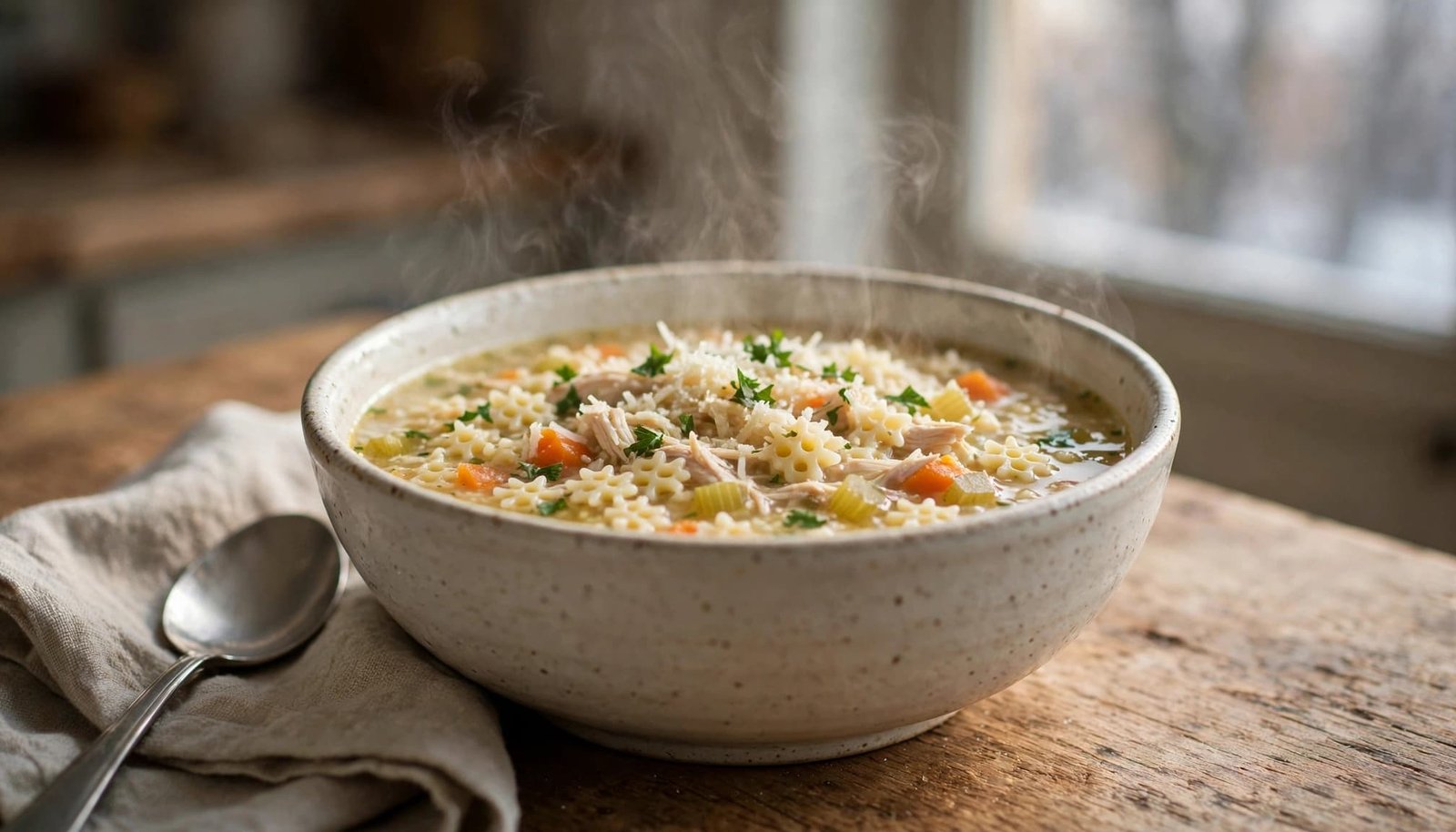
You can use chicken broth, bone broth, or vegetable broth. Shredded chicken makes the bowl more filling, but you don’t need it for a flavorful result. Classic pastina soup centers on small pasta in broth, while stracciatella is an Italian egg-drop soup with beaten eggs and cheese stirred into hot broth.
This recipe makes several comforting bowls with a short prep time and simple pantry ingredients.
What You Need for the Most Flavorful Bowl
For a dependable pot, gather low-sodium chicken broth or bone broth, onion, carrot, celery, garlic, tiny pasta, Parmesan, and olive oil or butter. Pastina, acini di pepe, and stelline all work well.
A Parmesan rind adds extra body if you have one. You can also add cooked shredded chicken, a bay leaf, thyme, parsley, black pepper, and a small squeeze of lemon.
Taste before adding salt. Broth, Parmesan, and a Parmesan rind can bring plenty of seasoning on their own.
Choose Your Favorite Soup Texture Before You Cook
Leave the vegetables in small pieces if you like a rustic soup. Blend part of the pot for a thicker broth with texture, or blend everything for a smooth, spoonable bowl.
Handle hot liquid with care. Let the soup cool slightly, then vent the blender lid and cover it with a towel before blending in batches.
Cooking pasta directly in the broth gives you the freshest one-pot meal. However, cook it separately if you expect leftovers, because tiny pasta drinks up broth as it sits.
How to Make Italian Penicillin Soup Step by Step
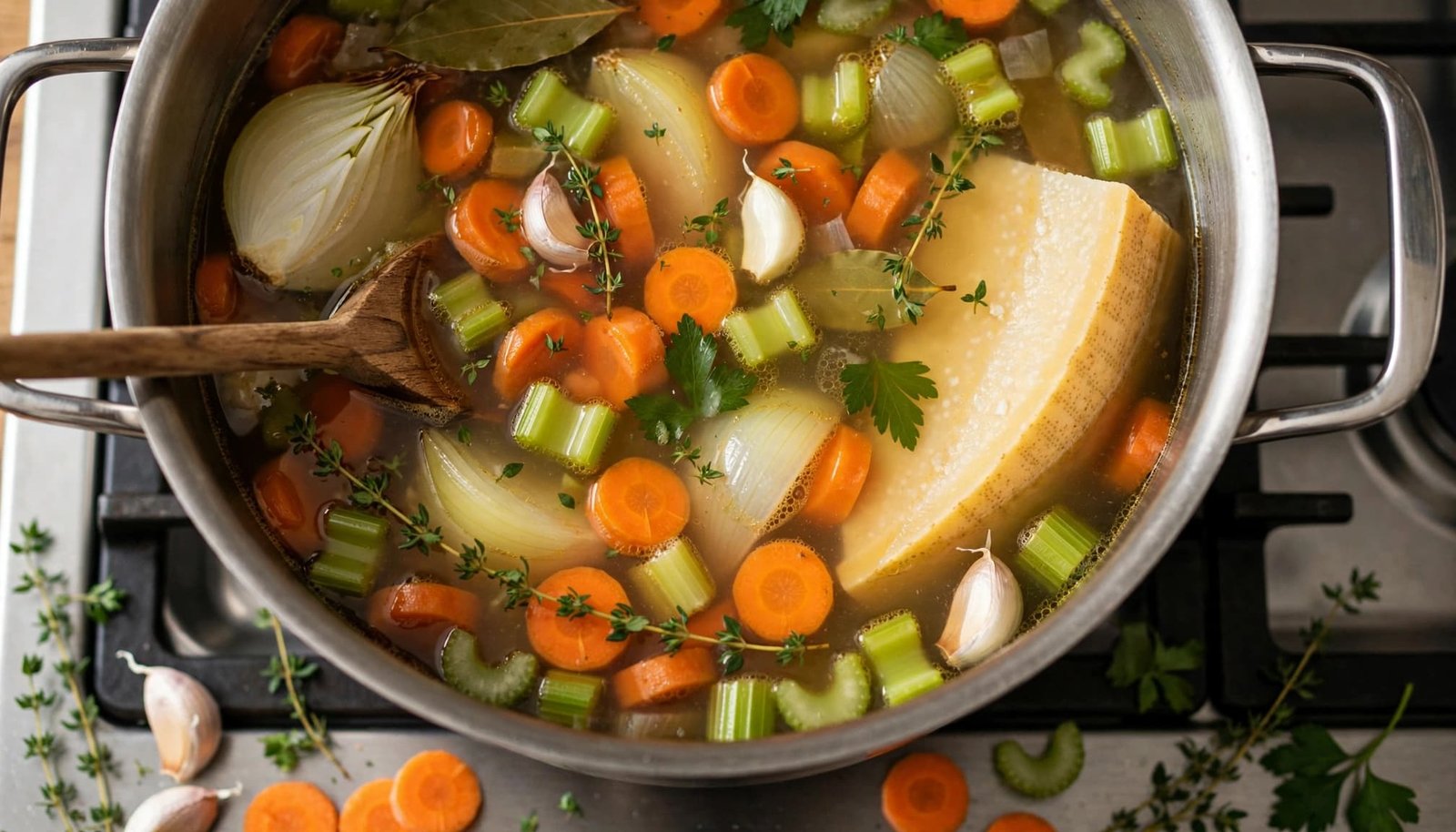
Start with 1 tablespoon olive oil or butter in a soup pot over medium heat. Add 1 small diced onion, 2 diced carrots, and 2 diced celery ribs. Cook for about 6 to 8 minutes, stirring often, until the vegetables soften but don’t brown.
Stir in 2 minced garlic cloves. After 30 seconds, pour in 6 cups low-sodium broth. Add a bay leaf, a few thyme sprigs, and a Parmesan rind if you have one. Bring the liquid to a gentle simmer.
Build a Rich Broth With Vegetables and Parmesan
Keep the broth at a quiet simmer for 15 to 20 minutes, until the carrots yield easily when pierced with a fork. A hard boil can make the soup cloudy and can break down the vegetables too fast.
At this point, the broth should taste savory and lightly sweet. Remove the bay leaf, thyme stems, and Parmesan rind before blending or serving.
For a faster version, use prepared broth and skip homemade stock. The softened vegetables and Parmesan still give the soup a homemade taste.
Blend the Vegetables and Add the Tiny Pasta
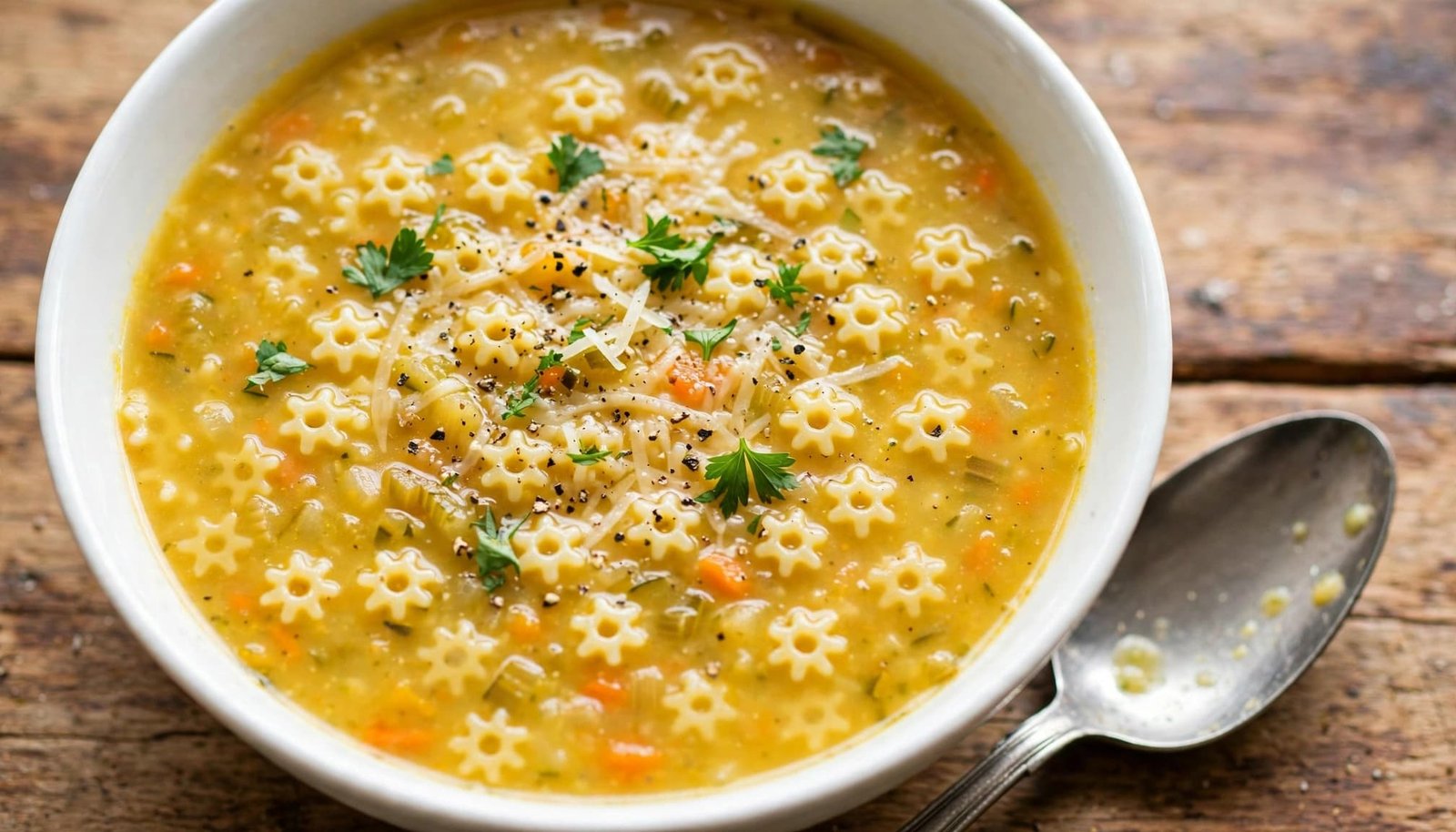
Scoop out some vegetables with about 1 cup of broth, then blend until smooth. Return that mixture to the pot for a thicker, silky broth. If you prefer a completely smooth soup, blend all the vegetables in careful batches.
Bring the soup back to a gentle simmer. Add 3/4 cup pastina, acini di pepe, or stelline, then cook according to the package instructions. Tiny shapes often need 3 to 10 minutes, so begin checking early.
The pasta should be tender but still hold its shape. Don’t overcook it, because it will continue softening in the hot broth.
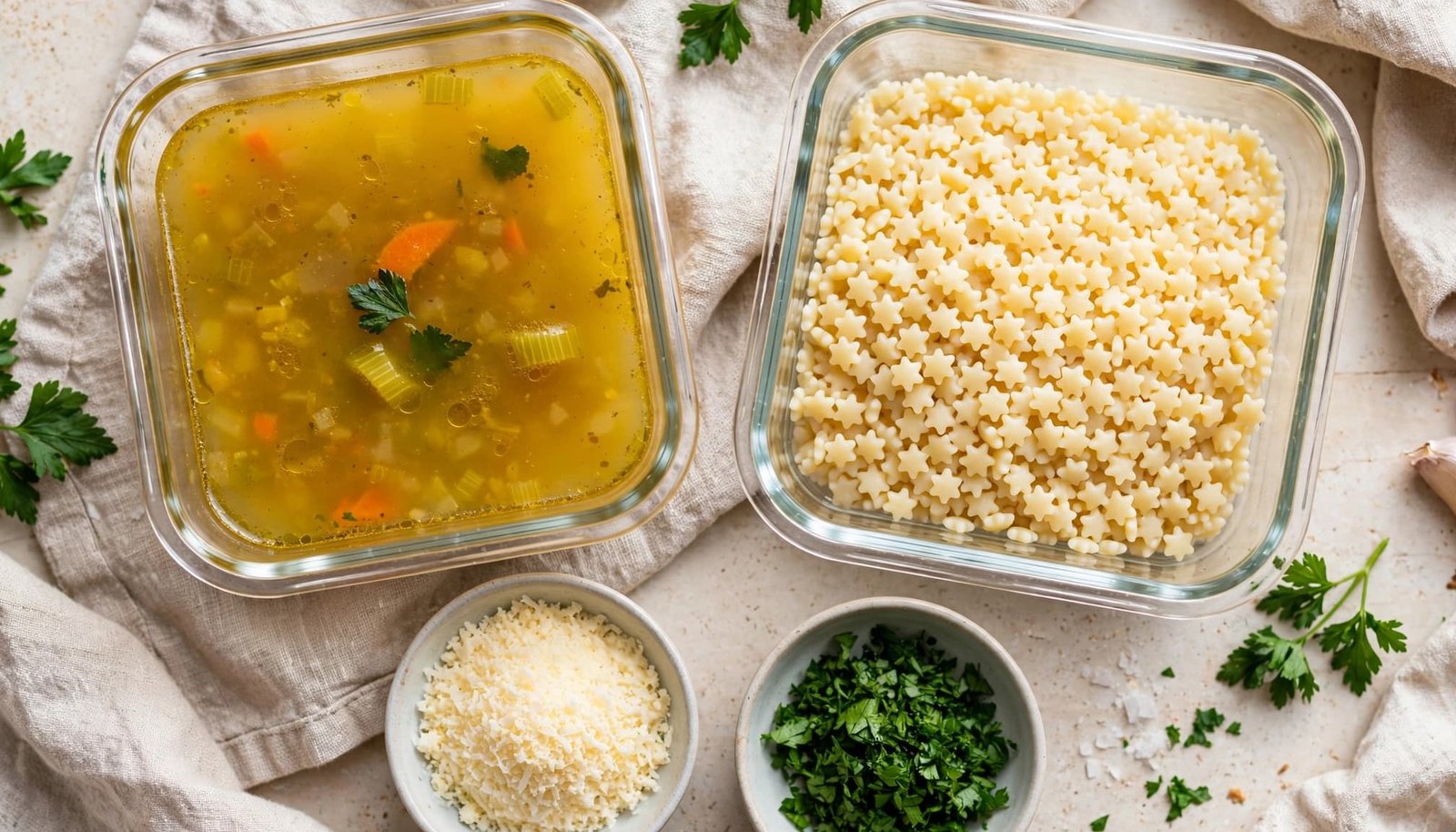
For leftovers, boil the pasta in a separate saucepan, drain it, and spoon it into each serving bowl. Store the pasta and broth apart.
Finish Each Bowl With Chicken, Cheese, and Bright Flavor
If you’re using chicken, stir in 1 to 2 cups shredded rotisserie chicken or leftover cooked chicken after the pasta is nearly done. Let it warm through for a few minutes, rather than simmering it for a long time.
Turn off the heat and add freshly grated Parmesan, black pepper, and a small pat of butter or drizzle of olive oil. A little lemon juice brightens the flavor without making the soup taste lemony.
Serve it with extra Parmesan, chopped parsley, fresh thyme, or warm bread. The easy Italian penicillin soup recipe tastes best while the pasta is fresh and the broth is silky.
Easy Ways to Customize This Italian Pastina Soup
The basic formula stays the same: flavorful broth, tender vegetables, tiny pasta, and a Parmesan finish. However, small changes let you use what you already have.
Make It With or Without Chicken
Shredded chicken turns the soup into a more substantial dinner. Use rotisserie chicken for speed, and stir it in close to the end so it stays tender.
For a meat-free bowl, choose vegetable broth and skip the chicken. You can add spinach, peas, white beans, or extra carrots if you want more substance.
Bone broth gives you a richer taste, while regular low-sodium chicken broth stays lighter and makes seasoning easier to control.
Swap the Pasta, Cheese, and Herbs Without Losing the Comfort
Pastina can be hard to find, so use acini di pepe, stelline, alphabet pasta, orzo, or another small shape. Larger pasta needs longer cooking time and may require extra broth.
A Parmesan rind is helpful but optional. Freshly grated Parmesan melts more smoothly than pre-shredded cheese. Parsley, thyme, rosemary, a pinch of nutmeg, or lemon can shift the flavor without changing the soup’s comforting character.
Turn It Into Stracciatella-Style Egg Drop Soup
Whisk 2 eggs with 1/4 cup grated Parmesan, black pepper, and optional parsley or a pinch of nutmeg. Slowly whisk a few spoonfuls of hot broth into the egg mixture to warm it gently.
Lower the heat, then stream the eggs into the soup while stirring constantly. The eggs should form soft ribbons. Avoid boiling after adding them, or they can turn grainy.
How to Keep Pastina Soup Smooth, Fresh, and Ready to Reheat
Pastina absorbs broth long after cooking ends. That is why leftovers can turn thick and mushy overnight.
Store pasta and broth in separate containers whenever possible. Cool the soup in shallow containers, refrigerate it within two hours, and keep it cold. The USDA’s leftover food safety guidance recommends reheating soups thoroughly, and chicken soup should reach 165 F.
When you reheat a bowl, add a splash of broth or water first. Warm it gently, then taste again before adding salt.
Parmesan belongs near the end, because adding it before you adjust the broth can make a finished pot saltier than expected.
Avoid these common mistakes:
- Don’t overcook the pasta, because its texture changes quickly.
- Don’t season heavily before adding Parmesan.
- Don’t boil the soup after adding eggs.
- Don’t blend uncovered hot soup in a sealed blender.
Simple Fixes for Thin, Thick, Bland, or Overly Salty Soup
If the soup is too thick, add warm broth or water a little at a time. For a flat-tasting pot, try black pepper, Parmesan, herbs, or lemon before adding more salt.
If it tastes too salty, dilute it with unsalted broth or water. Add more vegetables only if you also want a larger batch.
When the broth seems watery, simmer it briefly before adding pasta. The pasta will thicken the soup, so don’t reduce it too far.
Frequently Asked Questions
Can you make Italian penicillin soup without pastina?
Yes. Acini di pepe, stelline, orzo, alphabet pasta, and other small shapes all work well. Follow the package directions, because each shape absorbs broth at a different rate.
Is Italian penicillin soup the same as stracciatella?
They are related but different. Pastina soup centers on tiny pasta in broth, while stracciatella uses beaten eggs and cheese to form ribbons. You can combine both styles in one bowl.
Can you use store-bought chicken broth?
Prepared chicken broth or bone broth makes this recipe quick and dependable. Choose low-sodium broth so you can adjust the seasoning after adding Parmesan.
Why does the pasta make leftovers so thick?
Tiny pasta keeps absorbing liquid after you take the soup off the heat. Store it separately for the best texture, or loosen a combined batch with extra broth when reheating.
Can you make this soup without dairy?
Yes. Use olive oil instead of butter, and leave out the Parmesan and egg. Choose a chicken or vegetable broth that fits your dietary needs, then use herbs and lemon for extra flavor.
A Warm Bowl Worth Repeating
A pot of this soup gives you a simple answer for busy nights, cold afternoons, and days when dinner needs to feel gentle. Keep the formula close: savory broth, tender vegetables, tiny pasta, and a Parmesan finish.
Make it with chicken, add egg ribbons, or keep it fully vegetable-based. Serve your easy Italian penicillin soup recipe fresh, and you’ll have a cozy meal that fits whatever your kitchen holds.
Save the pin for later


I’m the creator of My Everyday Dish, a food blog focused on easy homemade recipes, comforting family meals, simple baking, and seasonal food ideas. I love finding practical ways to make everyday cooking less stressful and more enjoyable. Here, I share recipes with simple ingredients, clear instructions, and plenty of flavor, helping you make delicious meals and treats you’ll feel confident serving at home.
Leave a Reply